Letter from Exmoor: A coastal walk from Combe Martin to Holdstone Down

Combe Martin to Holdstone Down

There is a concrete path running around the side of the bay at Combe Martin, and further along I can see a flight of steps leading upwards. I decide the steps must join the South West Coast Path, knowing it is somewhere on the slope above, and I set off.

On the way I pass a young boy who has been fishing in a rock pool. He has caught a large crab. He tells me it is only one of many – but the rest escaped.
steps to nowhere, Combe Martin, Ruth's coastal walkI climb the steep steps but find, to my surprise, the top section becomes progressively overgrown. I push through nettles and find the entrance to the steps has been blocked up with a wall of bricks. Why deny access? I can only think it is for ‘Health and ‘Safety’ reasons.

I climb over the wall and find myself in a pretty open space overlooking the bay, with a promenade and a gazebo.

Combe Martin, Ruth walking the South West Coast Path(In the photo above, the blocked entrance to the steps is hidden at the far end of the row of flowering bushes.)

The South West Coast Path takes a steep route up the slope on the east side of Combe Martin Bay. There are steps to climb and in places the path is narrow with overhanging brambles. I am relieved when I emerge from the undergrowth and see a sign: National Trust, Little Hangman. Wow. That was quick. I’m there already!

b03 path up steps, Ruth walking the South West Coast Path, Hangman overgrown SWCP, Lester Cliff, Ruth in Combe Martinb05 Little Hangman, Ruth walking SWCP, Combe Martin, Devon

I stop to admire the view of Combe Martin below me. Contained within the narrow valley, Combe Martin boasts it has the longest village high street in England. [Later, thanks toWikipedia, I am disappointed to discover this is an exaggeration!]
 view over Combe Martin, Ruth walking the SWCP, Devon

And now for another disappointment.

 view across Wild Pear Beach to Little Hangman, Ruth LivingstoneI consult my OS map and discover I am not at the top of Little Hangman after all.

My climb has brought me up Lester Cliff. Ahead and below is the deliciously named Wild Pear Beach. The tall headland on the other side is the real Little Hangman.

[According to the official North Devon tourist site, Wild Pear Beach is often used as a nudist beach. Access to the beach is always difficult, but has been cut off completely by a recent landslip.]

I follow an easy track up to Little Hangman and climb to the top point (218m) to have a rest and take a photo. Ahead is Great Hangman, 100 metres higher at 318m, the tallest coastal cliff in England.
from Little Hangman to Great Hangman, Ruth's coastal walk, north Devon coast
The way up is surprisingly easy. The path is well-worn and, although the incline is fairly relentless, it is not particularly steep.
 easy slog up Great Hangman, Ruth's coastal walk around the UK
At the top there is a cairn of stones and a group of other walkers are standing on the summit, taking photographs of each other. They must have come up the other way and they look rather hot and tired.

other hikers, top of Hangman, Ruth walking on the SWCP, DevonI congratulate myself on my cool appearance, and wait for them to move on.
b11 self-portrait gone wrong, Ruth on top of HangmanRuth Livingstone - self portrait second attempt, Ruth Livingstone on top of HangmanWhen they’re gone, I set up my camera for a self portrait, balancing it on a nearby rock, and run back to clamber up the cairn. Unfortunately my first attempt was not very successful.

I adjust the camera and try again. Success!

Greater Hangman – thehighest point on the South West Coast Path. Or is it…

Although I know, Greater Hangman is the highest coastal cliff in mainland Britain, it doesn’t feel particularly exciting to be standing on the top. One reason is that the cliff slopes gradually, and so there is no sensation of standing on the edge of something and looking down at the sea far below. So, it turns out to be a strange anti-climax, in a way.

There is a higher hill ahead. The other walkers pointed it out. (You can tell it is higher because its summit is above the horizon.) I check my map. Holdstone Hill and 349m above sea level.

looking ahead to Holdstone Hill, Ruth's coastal walking, North Devon

The route up Holdstone Hill looks clear and easy. It may not be on the official coastal path, but I decide to climb it anyway.  Full of confidence, and with 90 minutes before my planned rendezvous with my hubby at a car park somewhere on the other side of Holdstone Down, I set off.

But, I had conveniently chosen to ignore the warning contours on my map. Between me and Holdstone lies a steep cleft. Sherrycombe.
Sherrycombe ahead, Ruth walking near Combe Martin, Devon, SWCP
No wonder the other walkers looked exhausted. The path descends very steeply and I slither and slide my way down into the valley. To make matters worse, the valley is full of flies. They buzz and whine around my face. Are they midges? Or biting flies? I don’t know, but they are very irritating. I swat them with my poles. At least they keep me moving.

The only time I stop is for a quick photo of the bridge across the stream at the bottom. I stand still for less than five seconds and the buzzing is almost unbearable.
valley of the flies, Ruth in Sherrycombe, north Devon
In my mind, Sherrycombe will always be known as the Valley of the Flies.

It is only because I slow down during my scramble up the other side that I realise there is another reason for the buzzing in my ears. Somewhere a farmer appears to be trying to get his tractor out of a ditch, and somebody else is hurtling around the field on a quad bike. I catch little glimpses of this drama as I puff and pant my way out of the valley.

On the higher slopes of Holdstone Hill, I was hoping the breeze from the sea would blow the flies away, but the air is very still and it is some time before I lose the last of the pesky things. Now the path flattens as it circles around the shoulder of the hill.
on Holdstone Down, Ruth walking near Combe Martin, SWCP

I forget my plans to walk up to the top of Holdstone and ignore the footpath that points up to the summit. Too tired for further climbing.

A rustling and crashing sound from the bracken causes me some alarm. But it is only a stray sheep. It looks startled to see me.
sheep in bracken, Ruth on Holdstone Down, SWCP
The remainder of the walk is straightforward and easy, if a bit monotonous. The stony track hurts my feet. I head for the only buildings in sight on the horizon. The road must be up there.
final slog, Holdstone Down, Ruth Livingstone on SWCP
I find the car park rendezvous and, out of four possible options, my husband has managed to pick the right one! He greets me with drinks and fruit, and “what took you so long?”. The view, in the mellow light of the evening sun, is truly lovely.
view from the car park, Ruth's hubby on the SWCP


Tim

Miles walked today = 10
Total since beginning = 1,420 miles

Route:

Another step along the Coleridge Way

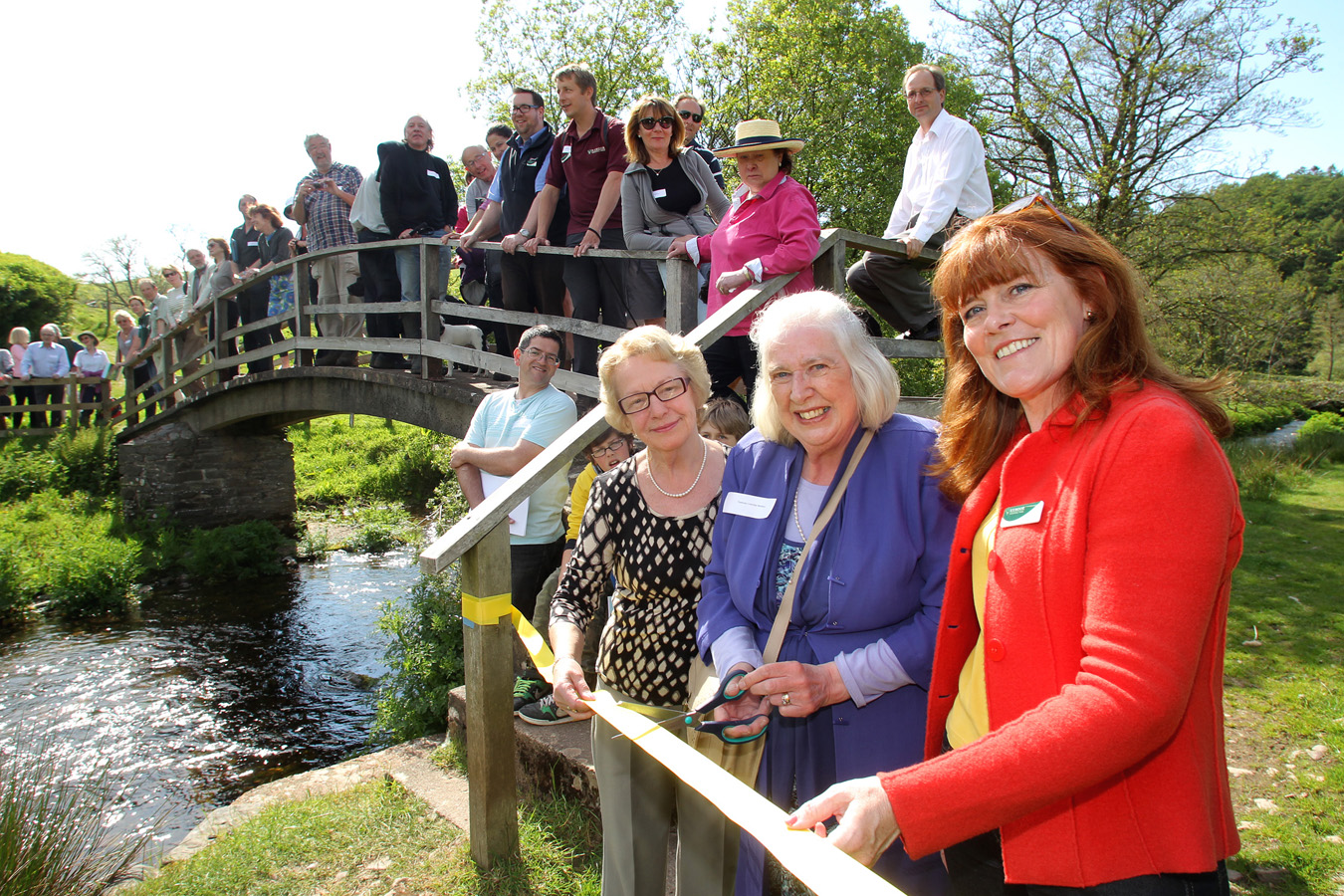
Walkers overlook the new Coleridge Way extension. Photo ENPA

Walkers overlook the new Coleridge Way extension. Photo ENPA

A new 15 mile extension to the Coleridge Way was opened today (Wednesday 21 May) by Rosemary Coleridge Middleton, the great, great, great-granddaughter of the poet Samuel Taylor Coleridge together with Andrea Davis, Chairman of Exmoor National Park Authority and Suzette Hibbert, Mayor of Lynton and Lynmouth and Chair of the Lyn Community Development Trust.

The ceremony took place in the picturesque village of Malmsmead in Exmoor National Park and was also attended by other members of the Coleridge family.

Andrea Davis, Chairman of Exmoor National Park Authority said: “It’s great that this has new extension to the Coleridge Way is happening in the 60th anniversary of Exmoor National Park. I’m sure the new route will be enjoyed by local people and visitors alike and hopefully it will provide the same economic benefits to the small villages along the way, and the area in general, as did the first.”

The Coleridge Way extension was funded primarily by the Exmoor National Park Partnership Fund with additional support from Lyn Community Development Trust, Lyn Valley Society, Lynton and Lynmouth Town Council (c/o the Lyn Economy and Tourism Alliance) and Lynmouth Flood Memorial Hall Fund.  Andrea Davis (as local county councillor) also contributed. The groundwork on the route was undertaken by the National Park’s Ranger and Field Services Teams.

The Coleridge Way extension is a 15 mile inland route from Porlock to Lynmouth following in the footsteps of the Romantic Poets. This extends the current 36 mile route from Nether Stowey to Porlock creating a superb 51 mile walk taking in some of the finest countryside in the country and linking the Quantock Hills AONB with Exmoor National Park.

Suzette Hibbert, said: “Back in the 1790s Coleridge and his fellow Romantic poet, William Wordsworth, loved to walk all the way from Nether Stowey to Lynmouth, a distance of about 50 miles, but when the Coleridge Way was opened 9 years ago, it stopped short at Porlock.

“We have all been working hard to extend the route the extra 15 miles to take it all the way to Lynmouth and we are grateful to Exmoor National Park which provided the largest share of the finance as well as the skilled manpower needed to upgrade the paths that together make up the extension.”

Rosemary Middleton Coleridge expressed delight at seeing so many people at the opening and said: “Walking actually concentrates the mind, soothes the soul and helps sort out problems. It is a healer of the mind, body and spirit and Samuel Taylor Coleridge, my great great great Grandfather, knew this. I’m very proud to say that it is indeed the Coleridge way of doing things!  Keep moving, love thinking, do praying, keep talking, just toddle, but if possible do walk.”

Full information on the entire route, including downloadable route guides, is available on www.coleridgeway.co.uk.


Coleridge Way Extension (1)

Opening of the Coleridge Way Extension: Suzette Hibbert [Mayor of Lynton & Lynmouth and Chair of the Lyn Community Development Trust] – Rosemary Coleridge~Middleton [Great,Great,Great Granddaughter] – Andrea Davis [Chairman of Exmoor National Park Authority]


Descendents of Samuel Taylor Coleridge at the launch of the Coleridge Way extension: Rosalind Thomas [Great,Great.Great,Great Granddaughter] - Richard Coleridge [Great,Great,Great Grandson] - Rob Coleridge-Middleton [Great,Great,Great,Great Grandson] - Jerard Coleridge [Great,Great,Great Grandson] - Rosemary Coleridge-Middleton[Great,Great,Great Granddaughter]

Descendents of Samuel Taylor Coleridge at the launch of the Coleridge Way extension: Rosalind Thomas [Great,Great.Great,Great Granddaughter] – Richard Coleridge [Great,Great,Great Grandson] – Rob Coleridge-Middleton [Great,Great,Great,Great Grandson] – Jerard Coleridge [Great,Great,Great Grandson] – Rosemary Coleridge-Middleton[Great,Great,Great Granddaughter]

Originally opened in 2005, The Coleridge Way was an immediate success and attracted national and international press attention bringing new visitors into the area and helping to identify this part of the country with the work of the Romantic Poets.

The route connects two protected landscapes – the Quantock Hills, an Area of Outstanding Natural Beauty and Exmoor National Park. In addition to offering some fabulous scenery our landscapes are important as a means of linking culture with nature and the past with the present. Over 8,000 years of human history can be found within the Quantocks and Exmoor. Protected areas such as National Parks and Areas of Outstanding Natural Beauty are protected through legislation first drawn up following the Second World War through the National Parks and Access to the Countryside Act 1949.

However the idea of protecting nationally significant areas was not new, and was first raised by the Romantic Poets such as Wordsworth, Coleridge and Byron. Their writing spoke about the inspirational beauty of the ‘untamed’ countryside and Wordsworth famously claimed the Lake District as a “sort of national property, in which every man has a right and interest who has an eye to perceive and a heart to enjoy”.

Launch of new extension of Coleridge Way

On the afternoon of Wednesday 21 May 2014 the new 15 mile extension of the Coleridge Way will be officially opened in the picturesque village of Malmsmead, in the Doone Valley on the Devon/Somerset border, which is approximately half way along the route.

On the day there will be an optional guided walk finishing in Malmsmead, where others will join for the official launch, after which there will be a cream tea and minibus transport back for the walkers.

Originally opened in 2005, The Coleridge Way walking route, currently 36 miles long, links sites and locations associated with the Romantic Poet Samuel Taylor Coleridge during his stay in Somerset. The route begins at Coleridge Cottage in Nether Stowey and wends its way through the Quantocks to the coast, finishing in Porlock. The new section, way-marked with distinctive quill signage, will extend the walk to Lynmouth making the Coleridge Way a satisfying 51 miles in total.

20140517-090408.jpg

Road Trip

“Great place to live. Great place to visit. One of England’s undiscovered jewels.”
 Matt Swindlehurst about Exmoor. We couldn’t have put it better ourselves!
101 Matt Swindlehurst Motorbike

A visit to Exmoor

“Nearly cancelled w/e in @ExmoorNP @Exmoor4all cos of rain, so glad we went. Showers, rainbows & Snowdrop Valley – wow!”
Tweeted by Janette Noyes @Ginjan Sunday afternoon

Janette Noyes, Snowdrop Valley

Janette Noyes, Snowdrop Valley

Date for the Diary: Wimbleball Lake Astro Camp

101 Wimbleball Lake Event

From Saturday 1st until Saturday 8th March 2014 South West Lakes Trust would like to invite you to their Astro Camp at Wimbleball Lake as part of National Astronomy Week.

Exmoor National Park is designated as the International Dark Sky Reserve, the first place in Europe to achieve this prestigious award and only the second in the World. Wimbleball Lake was nominated as the first Dark Skies Discovery Site on Exmoor in November 2011.

The week long camp will incorporate a variety of exciting activities for all the family to enjoy including, talks and presentations, workshops, Planetarium, telescopes, stargazing opportunities, plus BBQ’s on Sat 1st, Friday 7th and Sat 8th March. People can attend for a couple of hours, or for the whole week, depending on their availability. Camping / caravanning is also available on our AA 3* rated campsite to maximize the stargazing opportunities. We also have 2 camping pods that are available to hire.

Alex Forster, South West Lakes Trust Exmoor Area Manager said, ‘South West Lakes Trust are really excited to be hosting this Astro Camp as part of National Astronomy Week. Stargazing at Wimbleball is phenomenal as there is so little light pollution, however there will be a wide variety of indoor activities each evening just in case it is cloudy!’

There are many positions at Wimbleball Lake where individual or group activities can take place with level hard surfaced areas overlooking the scenic lakeside with clear big sky views. For more information please call 01398 371116 or email aforster@swlakestrust.org.uk

South West Lakes Trust is the region’s largest combined environmental and recreational charity.  Its 50 inland water sites, encompassing 5,000 hectares of land and water spread across Devon, Cornwall and West Somerset, attract in the region of 2m visits annually.  It is listed as being in the top 3,000 of the country’s 150,000 charities. 3,112 days of assistance by volunteers were freely given in 2011, in return training was offered in relevant skills (86 days in 2011).   SWLT involved over 90,000 people in water sports activities in 2011, including 24,400 children.  It manages large tracts of moorland and significant areas of woodland, with Forest Stewardship Council accreditation.

Letter from Exmoor: …….. can you hear the silence? ……………

By Gary Scarlett. First published on his Blog “Chunky Mamil” on 5 December 2013

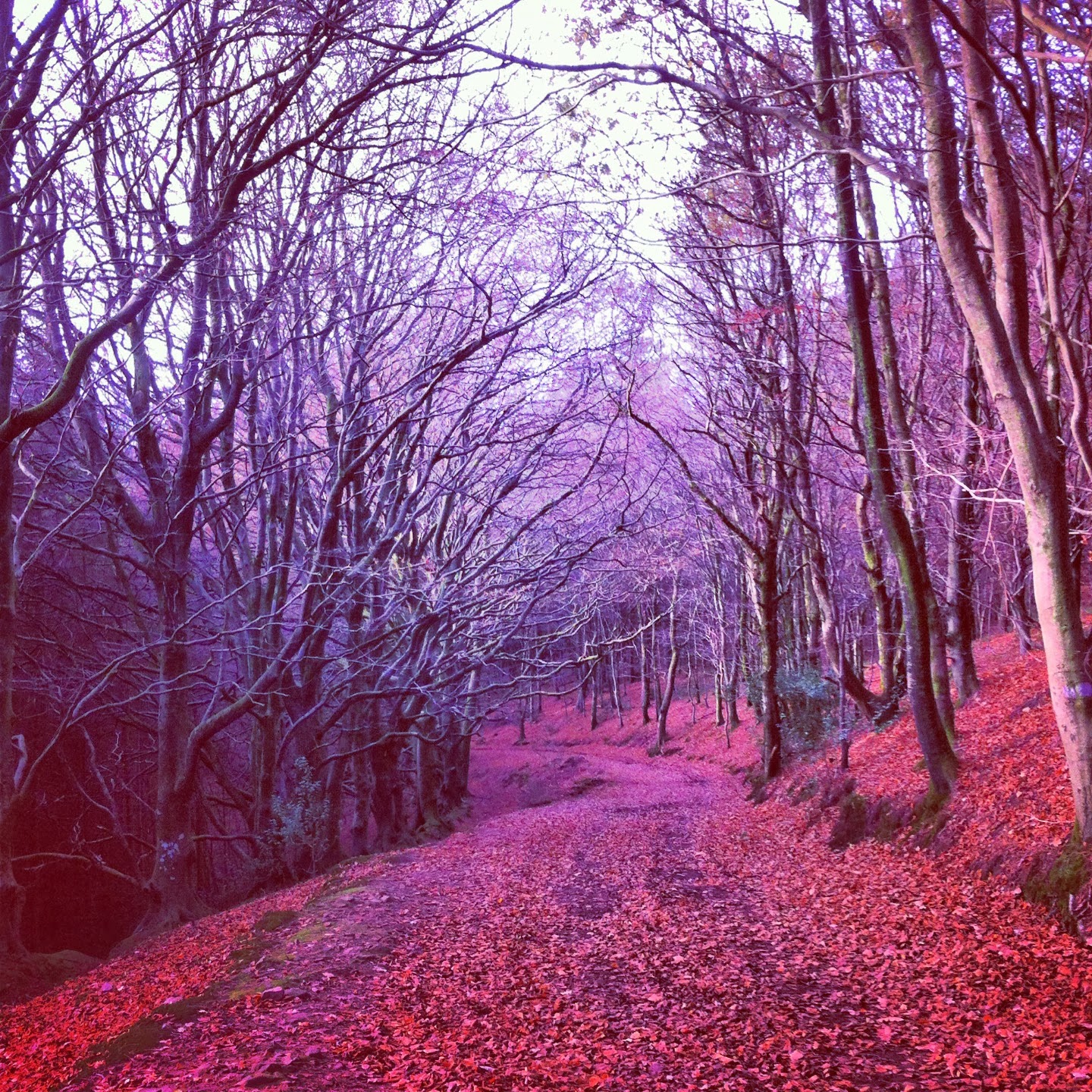
I’ve been neglecting the blog a bit lately and riding my mtb so I thought I’d put both of those straight today. I have been riding though and meeting interesting people so although the keys have been idle I haven’t. With my rest days falling during the week and a last minute window in my good friend Jennifer’s schedule, I grabbed the opportunity to visit her and ride some of that flat stuff last Wednesday. Nice riding around the levels a real haven for birds, swans, herons, starlings the odd magpie and even a partridge but no pear tree 🙂 We rode some of those long straight roads they like around there but thankfully with little wind, stopped for coffee, chatted and even found a hill to ride up on the way back.Yesterday started a bit damp but I had to get out so did a quick loop on the road bike, it wasn’t too bad and was glad I got out. Still lots of colour about but as a friend of mine commented about this photo, winters coming over the hill 🙂

In the afternoon I was invited to lunch by the lovely Elke who promotes all things good on Exmoor through her Exmoor4all website. She had organised a Christmas lunch for some Exmoor business folk and kindly invited me along too as I always try to show how wonderful it is around here through the blog. The location was The Culbone, a pleasure to get to as it means driving up and along Porlock hill with great views to enjoy on the way. The food was excellent and so was the company, nice to meet people I sort of knew through twitter and some new people too.

So to today, very windy so definite mtb day, getting blown across the road on the road bike didn’t appeal at all. The usual slog up to Hopcott but sheltered and the trails were dry after this cold snap and rapid progress to the top of Grabbist hill with the wind behind me. Although it was dry the tracks are covered in leaves and hide roots, rocks and toxic dog leftovers, luckily just the odd stone whacked me in the shin today.

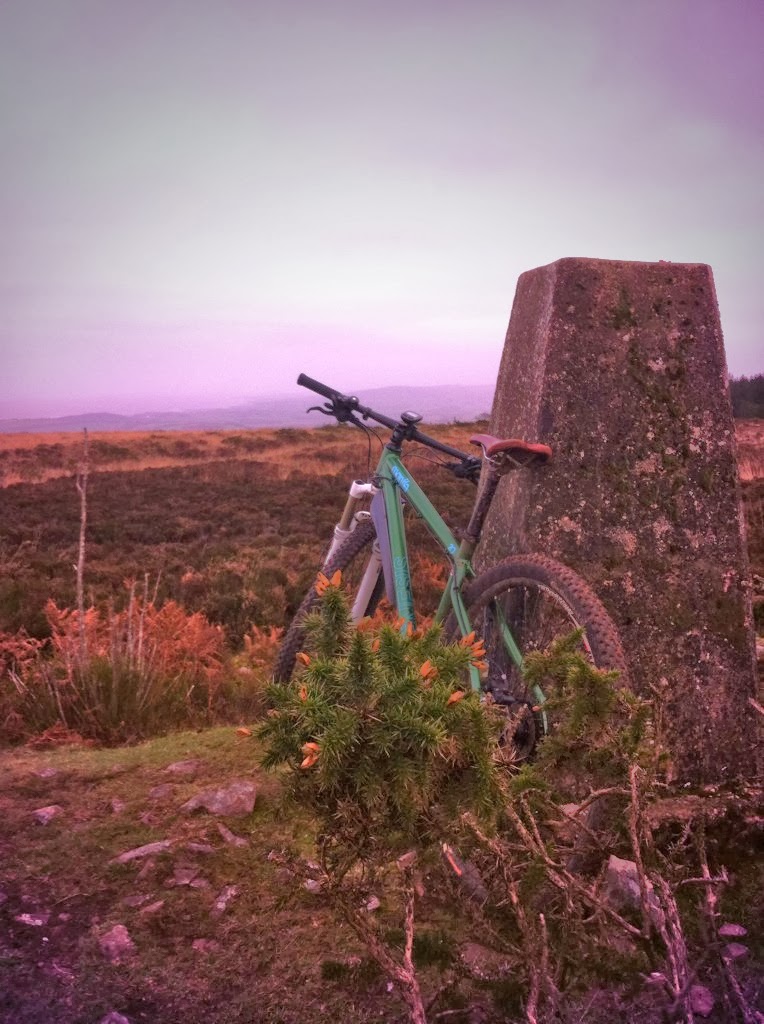
I went for a loop around the Crown estate woodland on the other side of Dunster, hard going in the wind on the exposed climb up and around Black Hill to the trig point. The descent was very quick but a bit boring on the fireroads but once nearer Dunster I rode some more interesting tracks before heading back up Grabbist Hill.

After negotiating the ascent of Grabbist I headed back up the ridge and down some of my favourite tracks back towards home, felt good, rode up stuff, not a bad ride at all.

Letter from Exmoor: …some summer days I hide away and wait for rain to come……..

Text and photos by Gary Scarlett who first published this post on his blog “Chunky Mamil” on 17 November 2013

Sundays off are a rare treat for me so I grabbed the opportunity to get up early and hit the hills on the mtb. I didn’t feel like it at first though, tired after going back on shift my and head felt clogged up with stupid thoughts, the first hill of the day felt like hard work even more than usual.

I persevered though, the weather was cold, still and grey my kind of weather, the cloud just sits on the hills and you can get lost in the mist. Went down some new tracks and up some tracks I usually go down you get the idea, even though the legs felt like lead I still rode up them.

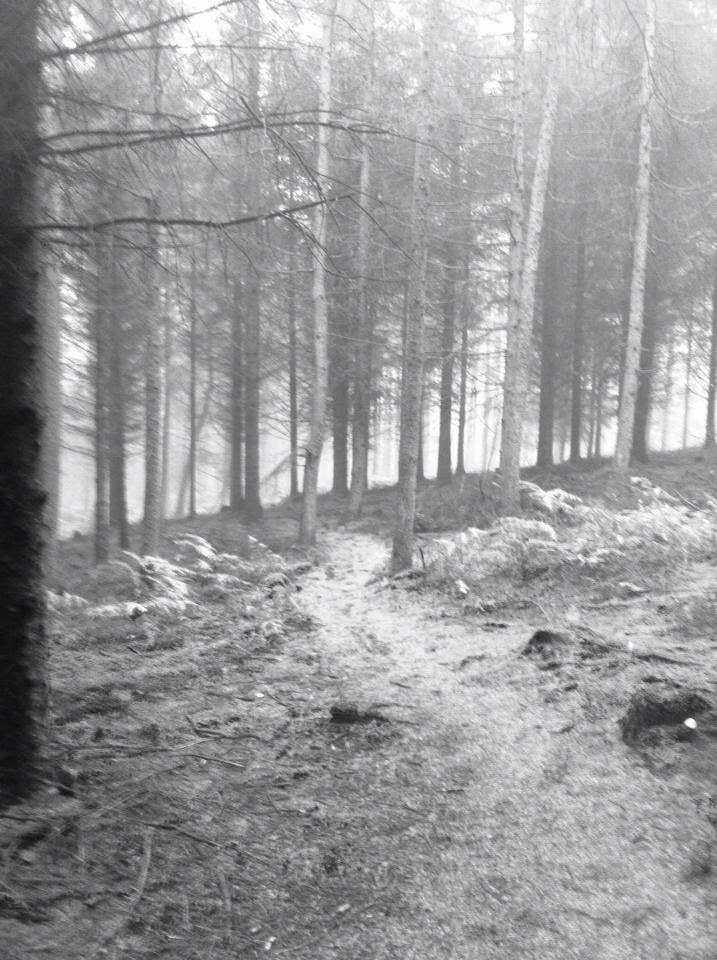
There’s a little track someone has made out in the forest so I headed down that towards home. So quiet and peaceful in the trees not a sound even the squirrels must have been having a lie in. It was so quiet I wish I could capture the moment or portray it better, it was a good place to be……..

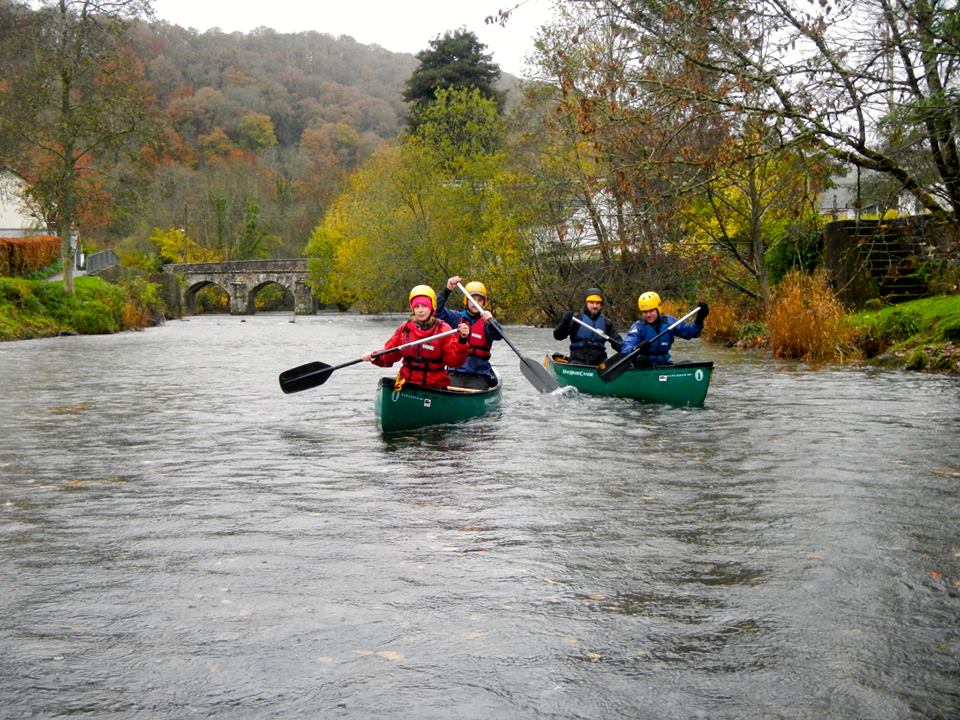
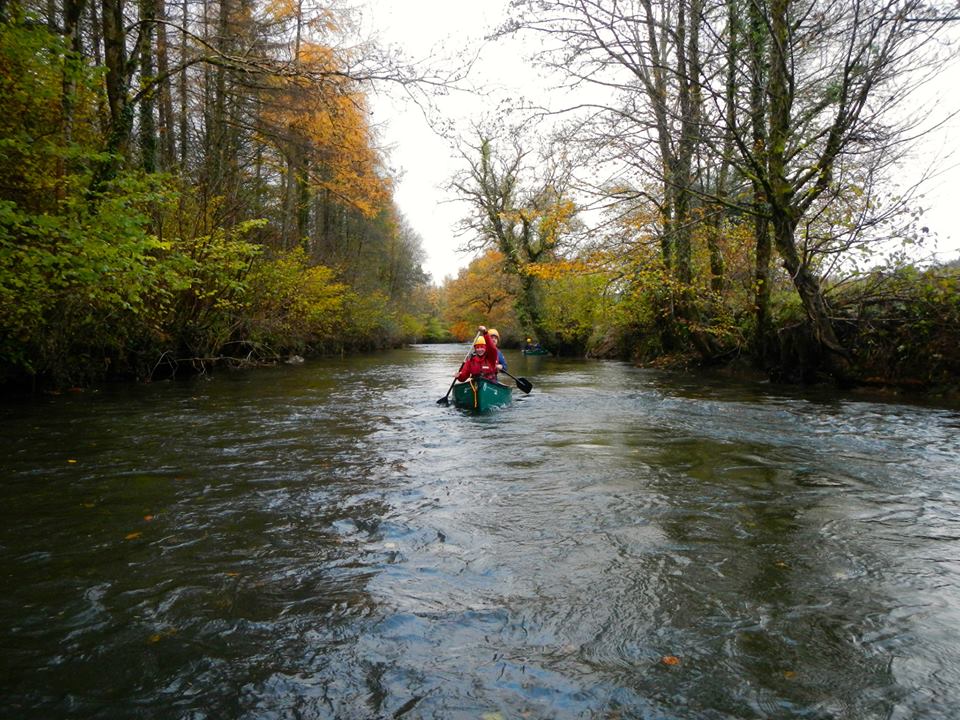
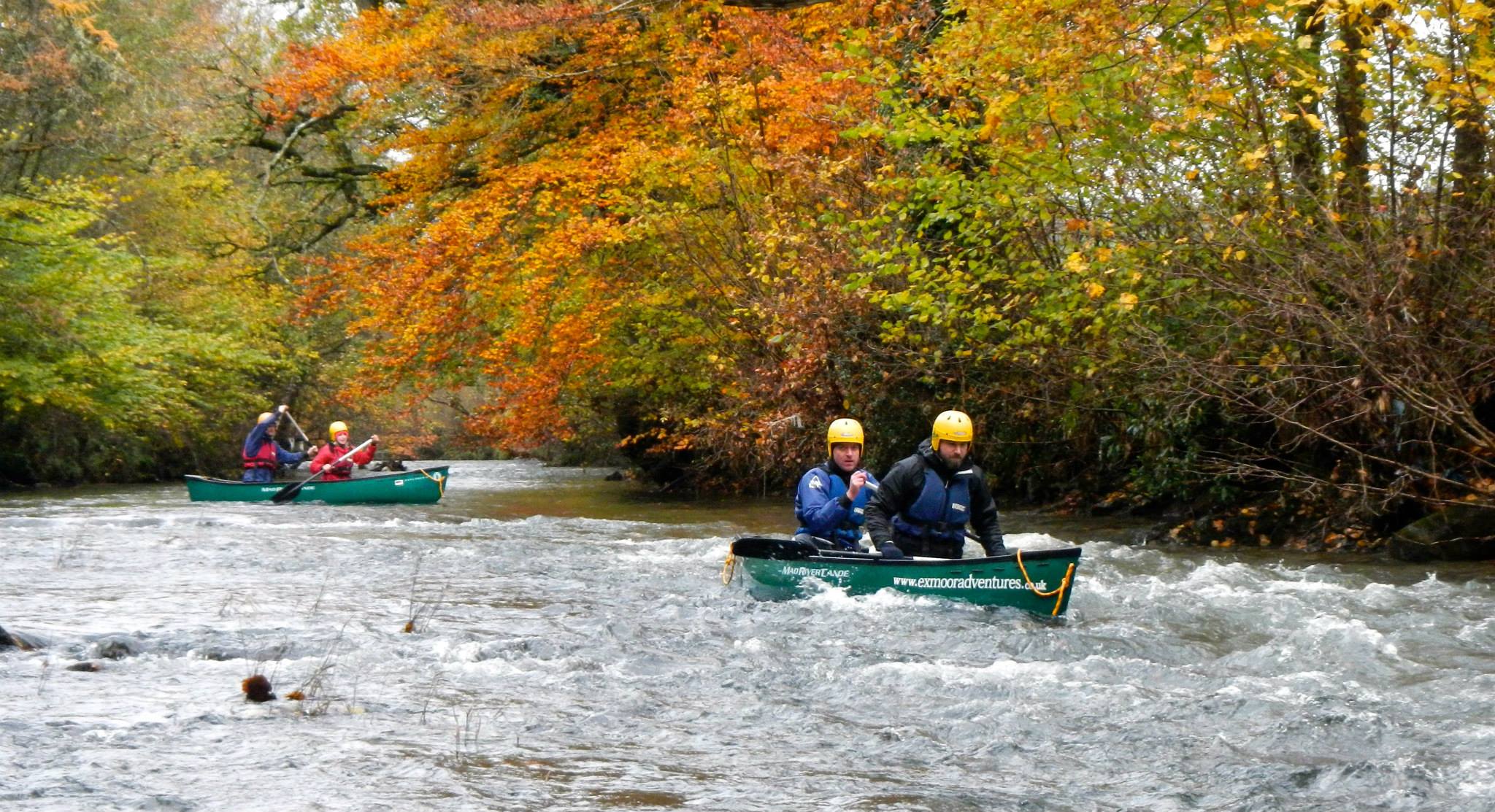
Canadian Canoeing on the River Barle

We think that this really looks like a lot of fun. If it’s something you would like to try out, then get in touch with Exmoor Adventures (special discounts for Exmoor Club members available)

The only way is up???