Category: General
North Devon Hedgehog Rescue – Our Charity of the Month
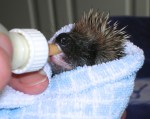
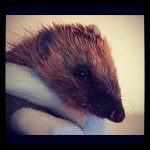
Welcome to North Devon Hedgehog Care and Rescue located in Braunton. My name is Anni and I run a small independent care unit from my home where I provide care for sick, injured and orphaned hedgehogs. I can always be contacted for help and advice and I will always return your calls if you have to leave a message.
I always try to keep in contact with the people who bring me hedgehogs so that I can let them know how their hog is getting along and I always ask if people would like the hedgehog back (if it is safe) so it can be re-released as near as possible to where it was found.
Hedgehogs are rapidly declining in numbers over recent years and much of our work is helping to raise awareness of their plight and helping North Devon’s community of hedgehogs survive.
For more information you can visit our website and please also take a look at www.hedgehogstreet.org and sign up for the 2013 hibernation study! Below is a short snippet from their website which is brought to you by The British Hedgehog Preservation Society and the People’s Trust for Endangered Species.
Research in the 1970s by Britain’s foremost expert on hedgehogs, Dr Pat Morris (formerly of Royal Holloway, University of London), revealed a direct link between hibernation and climate: hedgehogs came out of hibernation up to three weeks earlier in the South West of England compared to Scotland. Furthermore, in East Anglia, hedgehogs similarly spent longer hibernating than in the London area or South West. This marked difference in hedgehog hibernation patterns across the UK shows a general trend of prolonged inactivity in proportion to the coldness of the winter.
Dr Morris explains: “Age, sex and weather all appear to influence the timing of hedgehog hibernation. For example, young animals may remain fully active into December, no doubt seeking to develop sufficient fat reserves to ensure survival during subsequent hibernation. Also, adult females that have had late litters or may still be lactating will need to feed intensively before hibernating, causing them to be active for longer than adult males. However, mild weather can also delay hedgehogs entering into hibernation or elicit premature awakening, impacting on the creature’s fat reserves and breeding times and consequently affecting the long- term survival of the species.”
The 2012 Hedgehog Hibernation Survey proved to be fantastically popular, with around 2,000 people logging around 45,000 hedgehog sightings through the online form. This makes it one of the largest datasets about hedgehog activity ever collected.
For donations:
Cheques made payable to North Devon Hedgehog Rescue and sent to Fair View,
Higher Park Road, Braunton, Devon, EX33 2LF
BACS Payment: Sort Code 30-98-61 and Account No 24247368.
Website: www.northdevonhedgehogrescue.org
Twitter: @NDhedgehogs
Facebook: www.facebook.com/NorthDevonHedgehogRescue

Exmoor on TV: Great British Railway Journeys on BBC2
Michael Portillo takes to the tracks with his copy of Bradshaw’s Victorian railway guidebook. In a series of railway journeys, Portillo travels the length and breadth of the British Isles to see what of Bradshaw’s World remains. Michael follows in the footsteps of the master engineer of the Great Western Railway, Isambard Kingdom Brunel, beginning at the line’s London gateway, Paddington Station and ending in Newton Abbot, Devon, the scene of one of Brunel’s heroic failures. Michael gets up close to a piece of natural history, visits a garden used as a viewing platform for public hangings and experiences a timepiece like no other.
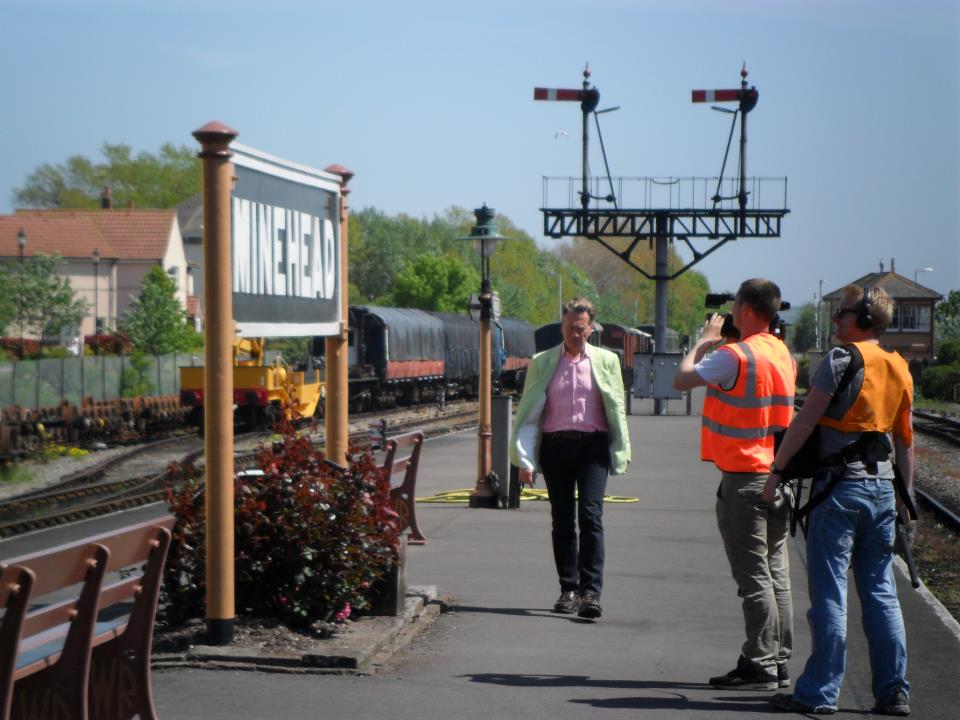
Wednesday, 30 January 2012, 6.30 pm on BBC2: Taunton to Minehead
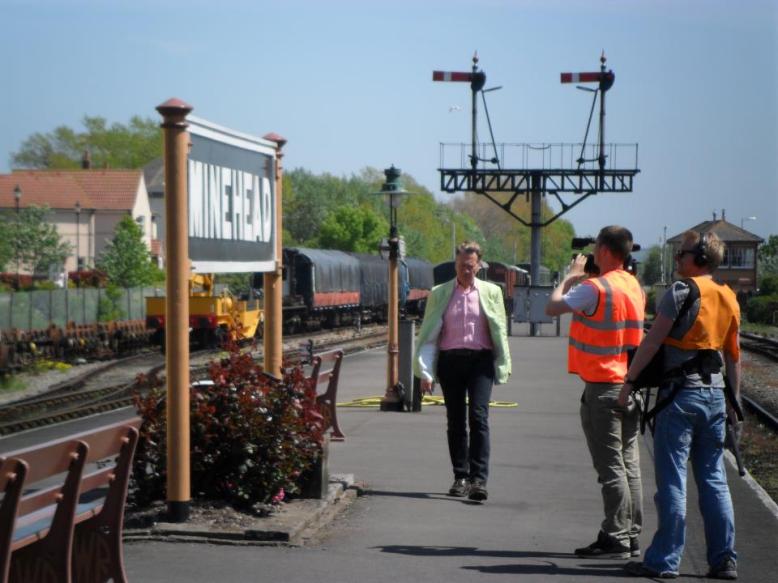
Michael Portillo travels on the West Somerset Railway from Taunton to Minehead.
If you’d like to do the same, then pop over to the West Somerset Railway website:
Our Railway, a true country branch line of the old Great Western Railway is full of fascination whether you are looking for a nostalgic ride back in time through lovely countryside or to study the railway and industrial heritage which our line preserves. The historic steam locomotives, coaches and wagons, and the buildings of our ten unique stations linked by a twenty mile scenic journey will repay hours of exploration. The surrounding countryside is as varied as it is beautiful. The gently rolling Quantock hills and distant Exmoor, unspoilt villages and farms nestling in leafy lanes, the cliffs and coast of the Bristol Channel with views of distant South-Wales, confident Church Towers, Dunster’s imposing Castle and Minehead’s seaside charm are all waiting to be discovered.
There are toilets on each train. Disabled persons accessible toilets are available at Bishops Lydeard, Crowcombe Heathfield, Stogumber Watchet and Minehead stations.
We can carry passengers in wheelchairs in our trains. Please let us know as space is limited and we can book you seats in advance on 01643 700384. Disabled toilets are available in our Lorna Doone carriage which can be booked in advance.
Dogs are welcome on our service trains and are charged £2.00 per dog.
There is a buffet car on most of our trains selling a variety of light refreshments a large number of which are locally produced. Please see the catering page for more information about our catering services.
Thursday, 31 January 2012, 6.30 pm on BBC2: Lynton and Lynmouth to Exeter
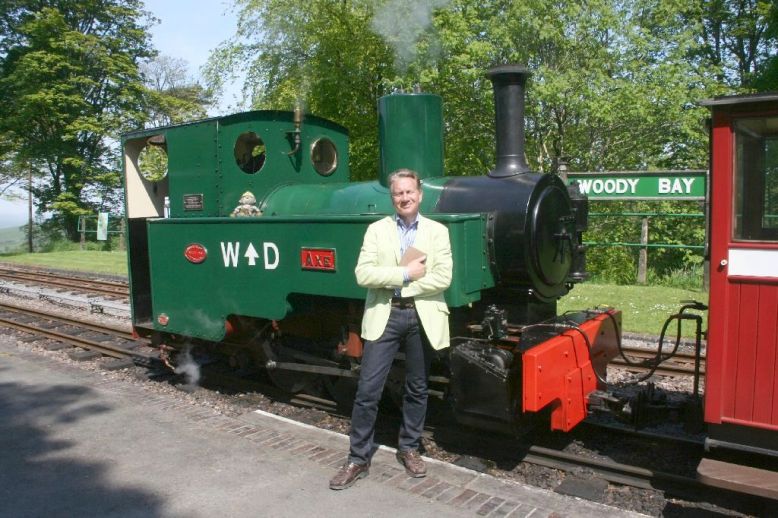
You can find out more about the Lynton & Barnstaple Railway on their website:
Steam trains through rolling countryside, with views out to wild moorland and the rugged coastline.
Originally opened in 1898, and closed in 1935; what you can see today at Woody Bay is just the beginning of an exciting project to rebuild one of the world’s most famous and picturesque narrow gauge railways; the legendary Lynton & Barnstaple Railway.
This initial section allows our visitors to experience a taste of what will one day become one of the ultimate narrow gauge treasures of the world as they once again travel by train along the original route above the delightful Heddon Valley near Parracombe in Exmoor’s National Park on the longest closed section of railway line to have ever been reopened solely through volunteer effort.
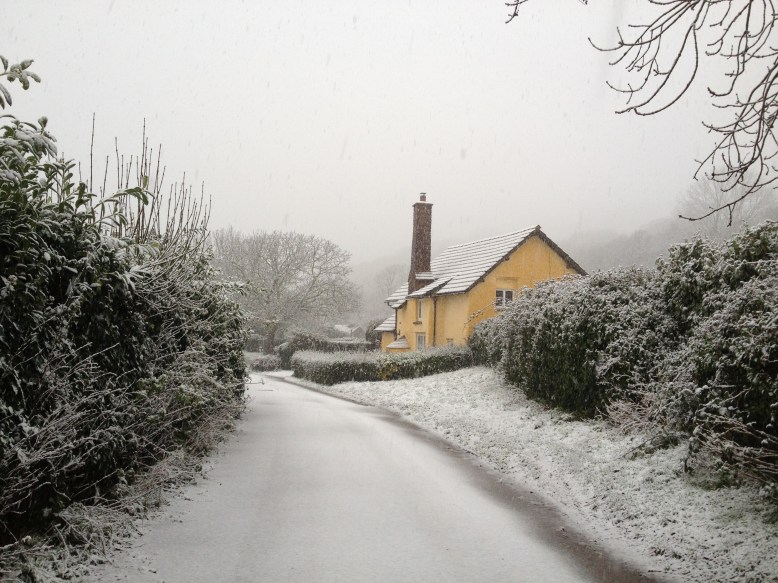
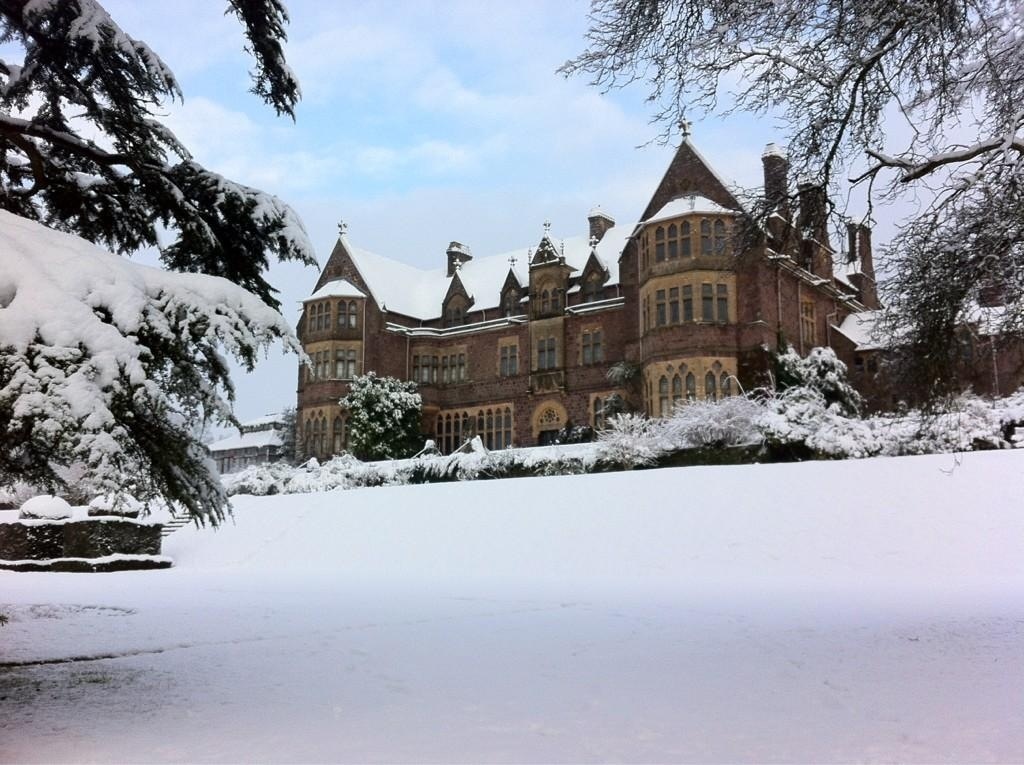
Last week’s snow
Extreme Kayaking
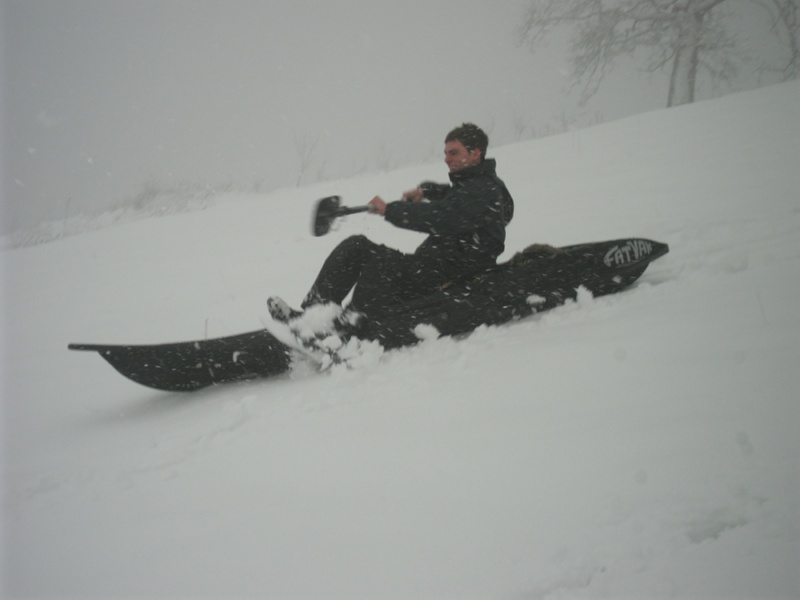
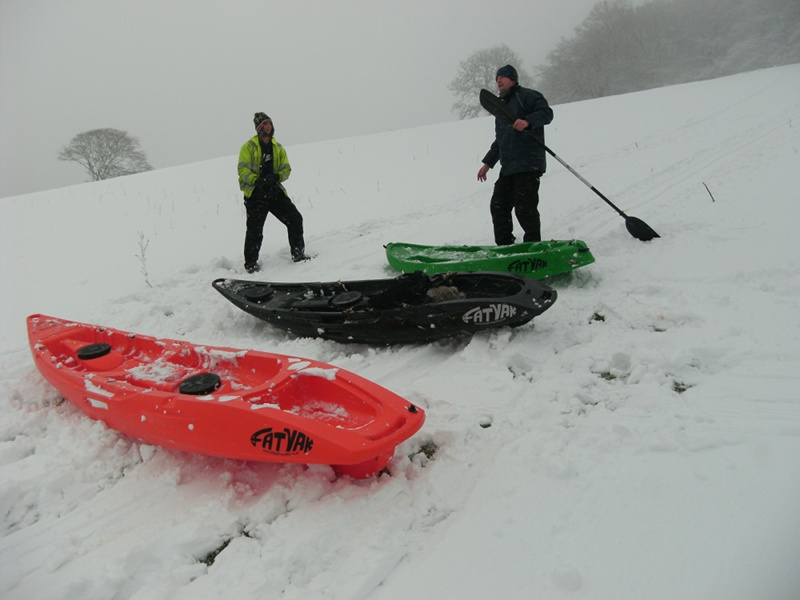
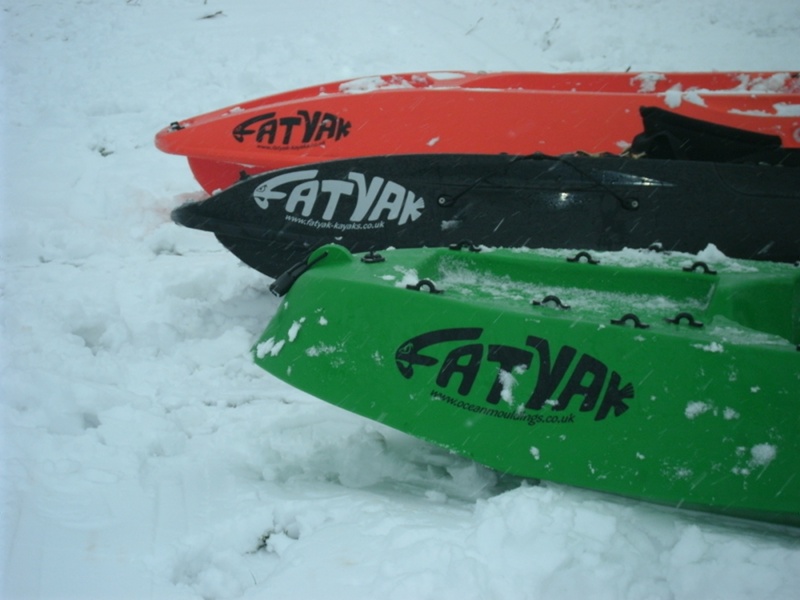
Local kayak manufactures FATYAK couldn’t resist taking their kayaks out in the snow…. And here is their report!
It seemed the snowfall was too good an opportunity to pass up for some of our guys in the factory. We sent them out on our Fatyaks to see how they faired in the snow. Their reports as follows:
Fatyak Surf – The surf is by far the best. Easiest to carry back up, can turn by shifting body weight, but a paddle helps. Brakes (feet) will stop you on most slopes quickly, and on a medium slope you can get up to 40mph ish.
Fatyak Kaafu – I think the Kaafu would be great to try standing up!!!
With a bit more practice I reckon I could start carving through the snow, I managed to get some turns in a little – but the surf is the kiddie!Fatyak Mahee – Mahee is for speed only. No control but a great thrill. All boats are fast, but the bigger you go, the more fear you experience. The Mahee is not for the weak hearted.
Walnut Tree Cottage
Watch Exmoor on BBC Countryfile
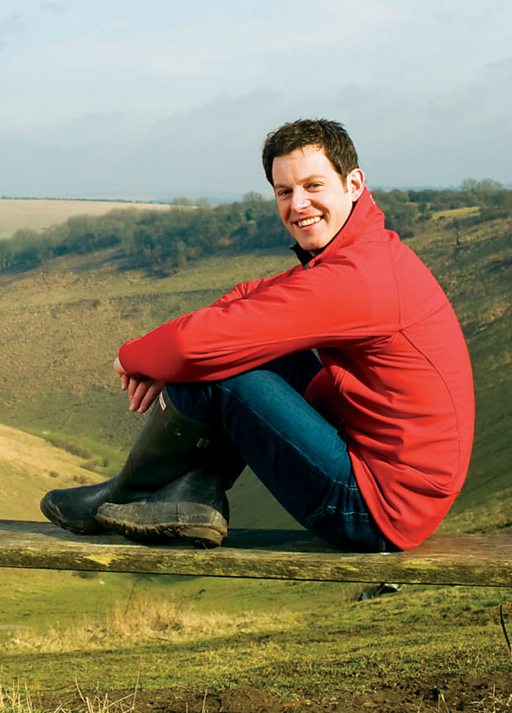
Matt Baker and Julia Bradbury head to Exmoor, a bleak and remote place where moorland and farmland give way to a spectacular coastline. For centuries its wild beauty has inspired writers, painters and poets.
Julia is on the trail of a little-known photographer who spent his days capturing life on Exmoor. A hundred years ago, Alfred Vowles photographed everything from villages to building to hunting. He produced thousands of postcards using just a folding pocket camera, a tripod and his trusty old pushbike. Julia finds out about the man behind the picture and she puts his techniques to the test, recreating one of his many photographs.
Vowles wasn’t the only one captivated by the landscape of Exmoor; novelist RD Blackmore literally put this place on the map when he penned the book Lorna Doone, which was to give birth to Lorna Doone country. Matt turns investigator as he tries to discover if this fictional tale is more fact than fiction.
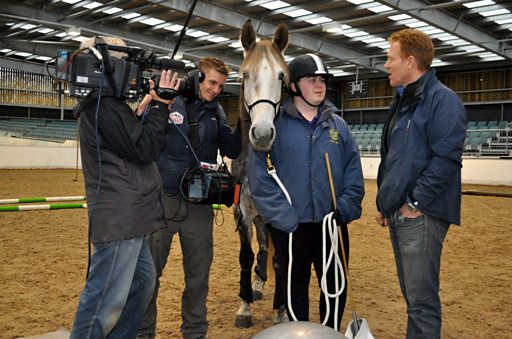
Elsewhere, Tom Heap is in Leicestershire finding out how the Schmallenberg virus looks set to spread across the country, with devastating effects for farm animals. Down on the farm, Adam takes his Exmoor foals to a world-class equine centre in Cheshire for some basic training.
- Pictures of Exmoor
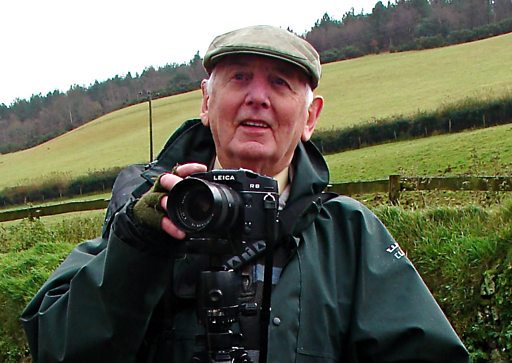
In the early 1900s when photographs were still a novelty, Alfred Vowles was as close as you could get to a one-man photo booth. Julia Bradbury discovers how this extraordinary man cycled over hill and dale, leaving a legacy of pictures which document rural life on Exmoor at the start of the last century. But in the days before digital cameras, darkrooms were needed to develop pictures. For Alfred that often meant using a stable, a chicken shed, or even the caravan where he lived and worked for much of his time on Exmoor. To find out just how tricky this all was, Julia works with amateur photographer Ray Turner to recreate and develop one of Alfred’s classic pictures of a local trailing hunt, the Minehead Harriers.
-
In search of Lorna Doone
The Victorian novel Lorna Doone is a romantic adventure, which has become a best seller. The book, by R. D. Blackmore, made Exmoor famous. Tourists flocked to follow in the footsteps of the lovelorn couple at the centre of the story and explore the stronghold of the villainous Doone gang. But where does fiction end and fact begin? Matt Baker tries to solve the mystery of what is real and what is make-believe – a journey of discovery that takes him to some of the remotest parts of Exmoor.
-
Learning to behave
Eric the Bull’s calves are growing up fast and as they approach adulthood Adam Henson decides to give them a very successful first lesson on the halter. But his Exmoor foals are proving to be more of a handful, so Adam takes them off to a world-class equine college. Here he gets some help with the foals and discovers how young horses – and students – go through some unusual routines as they undergo training.
Find out more about Exmoor ponies
New homes for owls
It is thought that, in the last 80 years, the UK’s barn owl population has dropped by a staggering 70%. One major reason for this is the loss of many of their traditional habitats, such as old trees and ruined buildings. Julia Bradbury visits a project which could change the odds by putting a barn owl box in every parish in Somerset. That’s 335 new boxes by next year. Julia teams up with Chris Sperring from the Hawk and Owl Trust. Together they go to meet Jonathan Webber, who’s willing to host an owl box. But will his family farm come up to spec?
Find out more about the project to house Somerset owl
-
Schmallenberg returns
Tom Heap investigates the return of the Schmallenberg, a virus which leads to the birth of deformed or dead lambs and calves. In the last six months the number of British farms affected by the disease has more than tripled. New cases are being reported daily and farmers right across the UK are becoming increasingly worried about the affect on their livestock and their incomes. But, as Tom discovers, Schmallenberg could be just the first of a new wave of diseases to reach our shores.
Credits
- Series Producer
- Teresa Bogan
- Presenter
- Matt Baker
- Presenter
- Julia Bradbury
- Presenter
- Tom Heap
- Presenter
- Adam Henson
Watersmeet in Winter
Exmoor on Horseback
Emily and Brodie only recently moved to Exmoor from Kent. Now the two of them are discovering Exmoor together. You can follow their adventures on Emily’s Facebook page: Exmoor on Horseback