Exmoor’s aflutter – 3 Orange Butterflies Wanted!

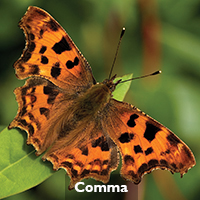
CommaExmoor Wild Watch 2014 needs your help to learn more about 3 special orange and brown butterflies, so pick up a FREE photo guide to help you identify them, from the 3 National Park Centres or on the Exmoor Wild Watch website. ( www.exmoor-nationalpark.gov.uk/wild-watch )

Exmoor National Park is home to several of Britain’s rarest butterflies – but when it comes to monitoring, it is not only the endangered species that count.

The 3 target species are Heath Fritillary, Small Pearl Bordered Fritillary and, surprisingly, the Comma. Despite Commas being considered common, Exmoor National Park’s records are short of data on this little beauty. So please keep your eyes peeled during the summer months.

Paul Camp, National Trust Ranger explained, “June and July are the best times to spot some of the UK’s rarest and most endangered butterflies.SPBF
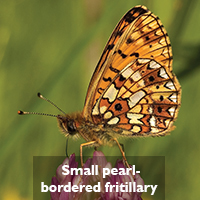
“The extremely rare Heath fritillary is found in many of the steep sided combes around Dunkery, Alcombe Common, Grabbist Hill Giant’s Chair and Haddon Hill – 90% of these Exmoor locations are on National Trust land. Commas could be almost anywhere on Exmoor – so please help us map where they are.”

Through the work of organisations such as Butterfly Conservation we now know Exmoor is a vitally important location for these species, particularly the Fritillaries, which are only found at very few sites in the British Isles.

Heath-FritillaryExmoor Wild Watch 2014 relies on local expertise from volunteers and officers of Butterfly Conservation, Exmoor Natural History Society and the National Trust. The project is supported by the Exmoor National Park and the Heritage Lottery Fund through the Heart of Exmoor Scheme.

Reporting sightings couldn’t be easier. Just visit www.exmoor-nationalpark.gov.uk/wild-watch or ring 01598 752509.
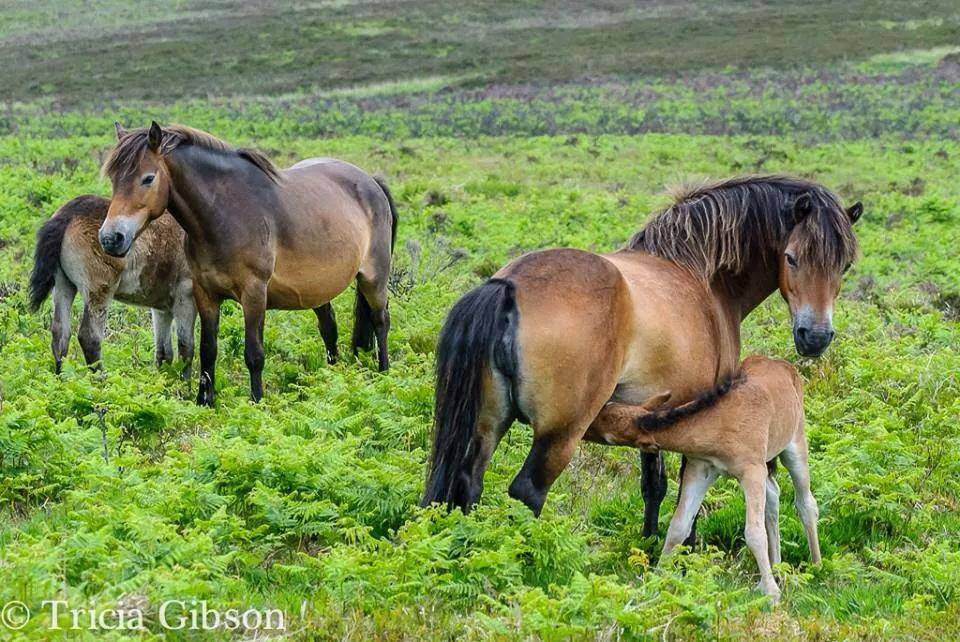
Exmoor Ponies: Mares and their Foals

304Tricia Gibson Exmoor Mares and Foals

Semi-feral Exmoor Ponies, captured on camera by Tricia Gibson.

Father and Son

awbitts Lanzulot and one of his colt foals. Photo by Tricia Gibson

Tawbitts Lanzulot and one of his colt foals out on the moor. Photo by Tricia Gibson


Tricia Gibson regularly posts her fantastic photos of Exmoor Ponies on the Exmoor Pony Club Facebook page.

Life on the Edge

These photos were taken by Rupert Kirby – you can follow the Lynton Goats on FB and read up about them on www.lyntongoats.org. Here is an extract from the website:

Roughly half way along the Exmoor coast lies a valley. A mysterious place the history of which is clouded by myth and legend. Once even more mysterious before its stone monuments were vandalised and laid waste and before the motor car had brought visitors in their thousands. Ancient peoples once lived in the valley’s hollow which had been formed by the melting glaciers even earlier still. Little evidence remains of the stone circles and standing stones or of the people who lived in the shadow of Holworthy Hill. Yet there is a living history in this valley. An ancient and rare animal lives here as it once lived all those long years ago.

Goats have been recorded in the valley of rocks over many centuries. The Domesday book recorded seventy-five goats in the Manor of Lyntonia. Over the years the fortunes of the goats have been somewhat mixed and man’s intervention has played an important part in their history. We know goats were removed in the mid-nineteenth century as Coopers guide of 1853 tells us that formerly wild goats were encouraged in the valley, and that it was felt necessary to destroy them as they killed so many sheep by butting them over the adjacent cliffs. Goats were again introduced into the valley in 1897 by Sir Thomas and Lady Hewitt. These were domestic goats believed to have come from Sandringham and although not ideally suited to the harsh environment of the valley survived as a small, mainly white herd until they eventually died out in the 1960s. The herd in the valley today originated from the Cheviot Hills of Northumberland and were introduced in 1976. They are well suited to the valley environment and breed freely.
This goat is our original native breed, introduced by the very first farmers, but further developed and shaped by the harsh climate of Northern Europe, so that it is small and stocky with a large rumen that can be packed full of poor grade fodder which then acts like a furnace to keep it warm. Even its ears are small to ward off the effects of frost, and its overall appearance is very much in keeping with the Exmoor Pony, a breed that developed in similar conditions. In fact, the British Native Goat has been termed the ‘Exmoor Pony Of The Goat World’.

Stags in a Row

Photo by Jochen Langbein

Photo by Jochen Langbein

Dancing Ponies

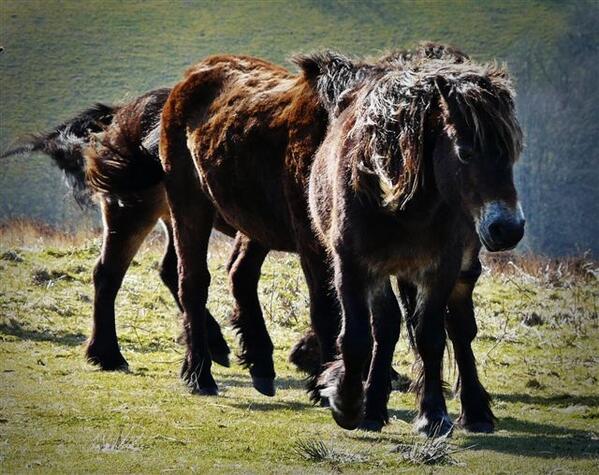
Exmoor Ponies enjoying the spring sunshine. Photo by Nigel Hester

Exmoor Ponies enjoying the spring sunshine. Photo by Nigel Hester

Feral Goats in the Valley of the Rocks

All photos by Rupert Kirby

A new day on Exmoor

Photo by Rosie Schneider

Photo by Rosie Schneider

14 winners in our Photo Competition in December

WINNER - Clayton Jane 1 dec

69 entries in the December Photo Competition

Each month, the public chooses their top 10 images by ‘liking’ them on this blog or on our Facebook page – the winner receives a free membership in the Exmoor Club for one year, and all images go through to the final. In October 2014, a panel of judges will pick the 13 images for our very first Exmoor4all calendar!