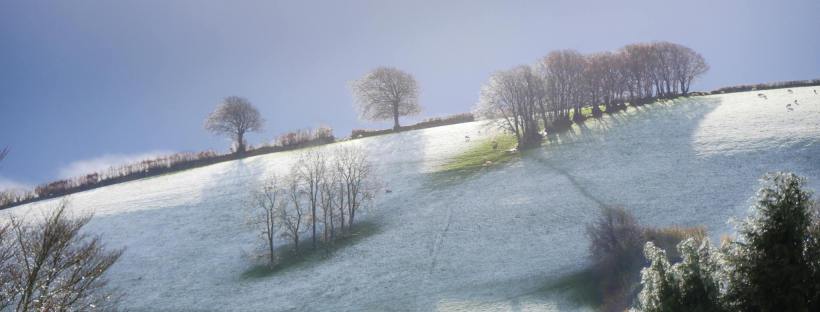
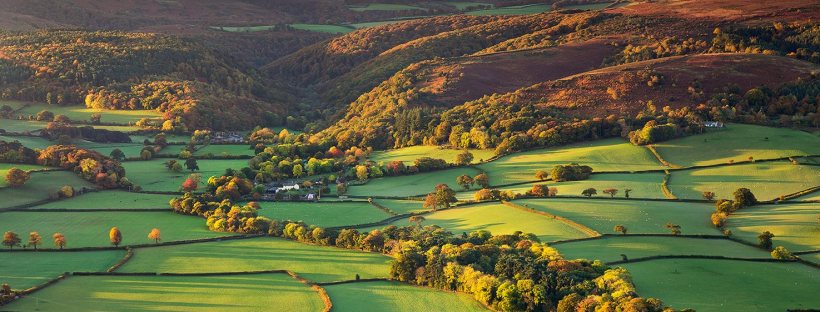
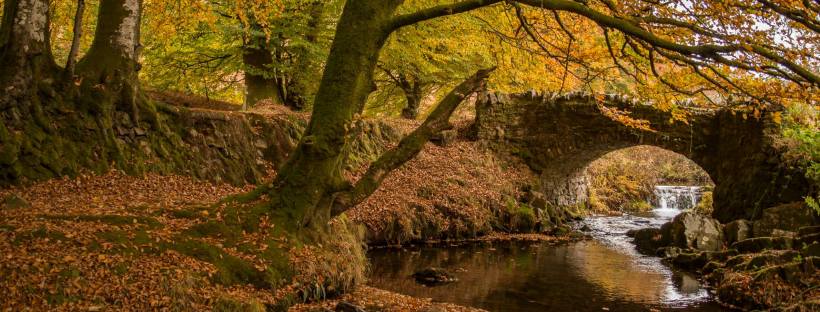
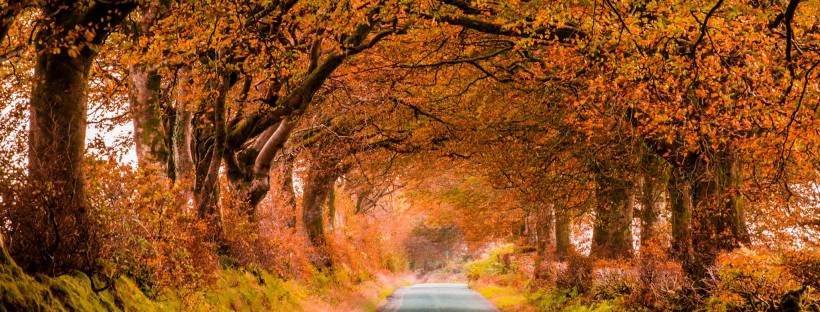
A few days ago Exmoor saw the first snow on top of the moor. In places it was quite deep, in others it just lightly dusted the landscape. On a miserable day like today, when Storm Angus unleashes torrential rain on the moor, causing flooding in many areas, it is nice to just look at the beautiful photos shared with us by our followers.
Red Deer Stag bolving

No better sight on Exmoor than to see and hear a Red Deer stag bolving on an autumn morning.
Rupert Smith
www.rupertsmithwildlife.co.uk
Exmoor Gallery: November 2016 – Part 2
Exmoor Gallery: November 2016 – Part 1
So many of our followers on Facebook and Twitter shared their outstanding images with us, that we thought it would all be too much in one big file for the month. Here is therefore the gallery of all photos posted in the first week of November. The next gallery, containing this week’s photos, will be published in a week.
Sit back and enjoy!
(PS Click on the image to see the photo in full)
Nutscale Reservoir
The reservoir in the catchment area of Horner Water is a quiet spot, not normally used for sport apart from private trout fishing. People not familiar with the layout of the land will find it difficult to spot the reservoir from the road as it lies in a deep valley.
In 1942, Nutscale Water was dammed to supply Porlock and Minehead with fresh water. Now it just serves a few properties.
The reservoir is 375 metres long covers an area of 8 acres. It holds up to 277,000 m3 of water. From the reservoir 3000 m3 of water flow through a pipeline to the Porlock Treatment Works.
The National Trust’s Holnicote Estate own the fishing rights which are leased out privately.
If you have any photos of Nutscale Reservoir, please post them on our Facebook and Twitter timelines.
| Surface area | 8 acres (3.2 ha) |
|---|---|
| Average depth | 12.2 metres (40 ft) |
| Water volume | 277,000 m3 (225 acre·ft) |
| Shore length1 | 1,140 metres (3,740 ft) |

Photo by Ian Brown
Exmoor – where money grows on trees
For centuries and across cultures, people have attributed trees with special powers. In some countries, trees are covered in red ribbons or notes, and throughout the UK, coins play a special role. One of the money trees can be found near Tarr Steps on Exmoor, as photographed by Charlie Hickman (photo above the headline).
The wishing tree is studded with coins, hammered in by villagers and tourists with the help of stones. People used to believe that sticking a coin into a wishing tree would pass an illness to the tree – and onto the person who pulled the coin out again. The custom goes back to the beginning of the 18th century; one of them, an oak wish tree in the Scottish Highlands, gained fame when Queen Victoria visited it in 1877.
So far we have been unable to find out how old the wishing tree is at Tarr Steps. If you have any further information about this, please put them in the comments below!
#WeLoveExmoor: The Calendar Winners
Here are all the winning images of the #WeLoveExmoor photo competition which will feature on the 2017 Exmoor4all calendar (now available to pre-order).
Over the next few days we will be posting the individual photos with a comment by the photographer – about the location and their thoughts about their photo.

Overall winner: Photo by Rob Hatton
Don’t forget to order your 2017 Exmoor4all calendar soon – we are only printing a limited number. The A4 sized calendar comes with an envelope and costs £9.50 plus p&p. Click on the image below to order:
Aerial View of the South West Coast Path on Exmoor
By Zade Aerial
Exmoor Gallery: October 2016
Help us give a dormouse a home
Dormouse numbers on Exmoor and in many other parts of the country are in decline, so to help reverse this CareMoor for Exmoor* is launching a Winter Appeal to raise funds for 150 dormouse boxes at three woodland sites in Exmoor National Park.
Philip Kiberd, CareMoor funding officer says: “We already have some dormouse boxes on Exmoor and know that they are being used, but over the years they become damp and we need to replace them and put up many more.
“To supply, install and monitor a dormouse box costs more than £20 and every penny helps, but all donations over £20 will receive an attractive ‘thank you’ card which could be sent to someone else if you’d like to make it a gift.”
Dormice are one of the world’s most ancient mammals and although their numbers have halved in the UK over the past 100 years, they are still be found on Exmoor, a nationally important habitat for the species.
Maintaining good dormouse population is particularly important as they are an indicator of the health of the environment in which they live. They are omnivorous – eating insects, flowers, nectar, berries and nuts, but they need a good source of food from April to October. This means if they are doing well the woodland is in a good condition for many other creatures, but when numbers decrease it suggests a lack of food that will also affect other animals.
The boxes provide shelter and safe nest sites for summer breeding. Most mice have regular broods, but dormice (not actually a mouse, despite the name) live much longer, around 5 years, have smaller broods and usually only one a year. A pair of dormice will usually have a brood of 4 – 6 of which maybe only one or two will survive their first year to breed themselves, making the population very vulnerable.
Patrick Watts-Mabbott, volunteer and outreach officer at Exmoor National Park says: “The boxes also make monitoring the health and population of the dormice much easier, so if you would like to help us please donate what you can and give a dormouse a home this winter.”
Donations will be welcome online via http://www.exmoor-nationalpark.gov.uk/enjoying/CareMoor-for-Exmoor/dormouse-appeal or by cheque to CareMoor for Exmoor, Exmoor National Park, Exmoor House, Dulverton, Somerset TA22 9HL or at any National Park Centre.
Photo: Hazel dormice – John Webley