Dates for your diary:
* Friday 12th January 7pm
Celebration Concert in Lynmouth. Commencing at the harbour, 125 years to the hour that the Maroons were fired in 1899 [maroons are a specific type of rocket which make a loud bang and bright flash that the RNLI used to use to call the crew to the Lifeboat], then moving to St John’s Church, Watersmeet Road, Lynmouth.
* Saturday 13th January 730am
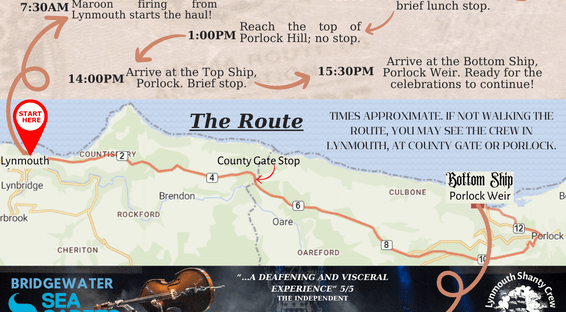
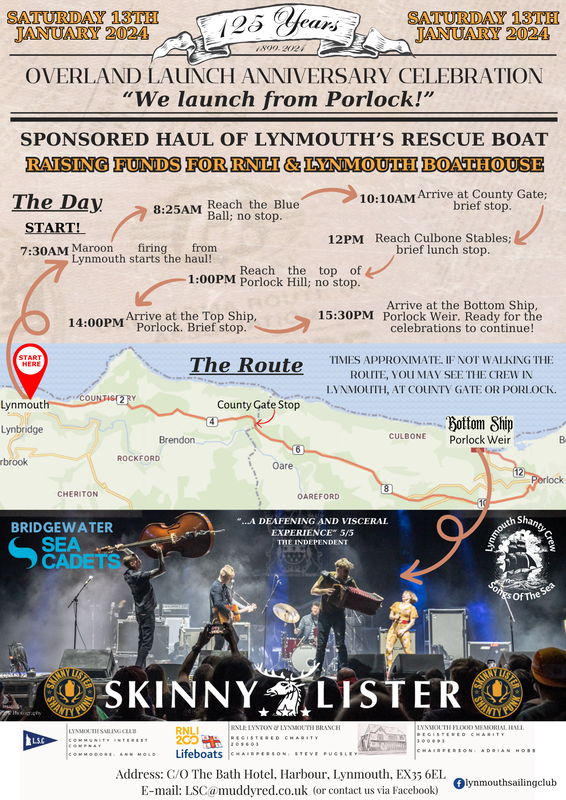
Sponsored Haul of Lynmouth’s Rescue Boat. Following the original route where possible, from Lynmouth, over Exmoor, ending at Porlock Weir.
To honour the 125th anniversary of the Overland Launch, and 200 years of the RNLI, a small celebration concert will take place in Lynmouth to acknowledge the achievements and tenacity of local community members, who so selflessly captured the spirit of the RNLI. The event features story, song, music and poetry. The organisers are delighted to be joined by RNLI guest speaker, Dr. Goodwin, CEO of the Voluntary Service Overseas (VSO) and RNLI Trustee, along with Lynmouth Shanty Crew, and a talented violinist.
Following this on Saturday the 13th, a sponsored haul of Lynmouth’s rescue boat ‘The Gilbey’ (an Arancia Class Lifeboat) will take place leaving Lynmouth at 0730, travelling over the moors to Porlock, to arrive at approximately 1530. A welcome party will be held at Porlock Weir in conjunction with The Bottom Ship Pub, featuring shanty punk group ‘Skinny Lister’, Bridgwater Sea Cadet band and Lynmouth Shanty Crew. Skinny Lister will be performing their original song ’13 Miles’ about the Overland Launch. We are also delighted to welcome Rear Admiral Peter Sparkes, CEO of the UK Hydrographic Office, to speak at the event.
More Detail from the steering committee:
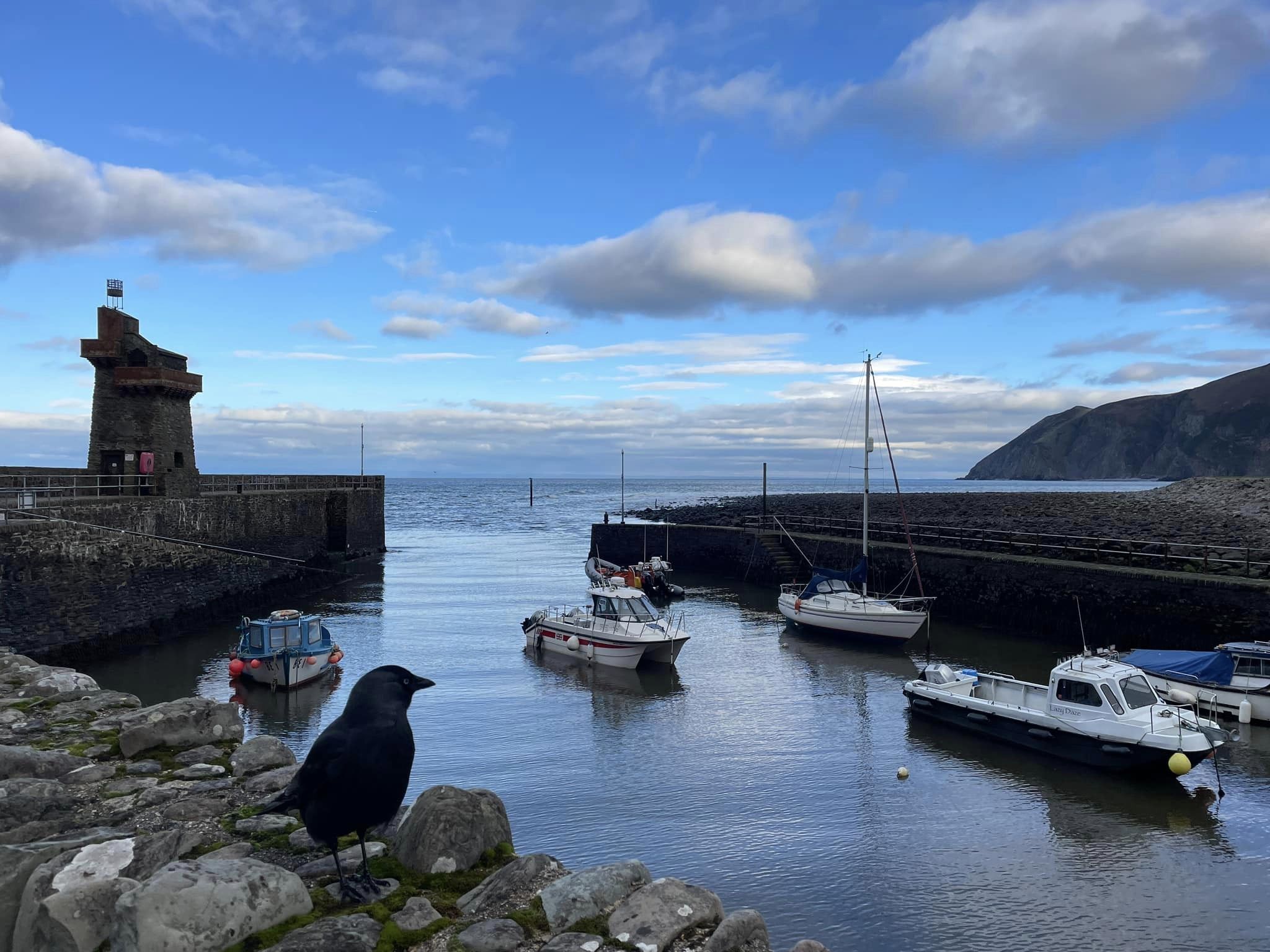
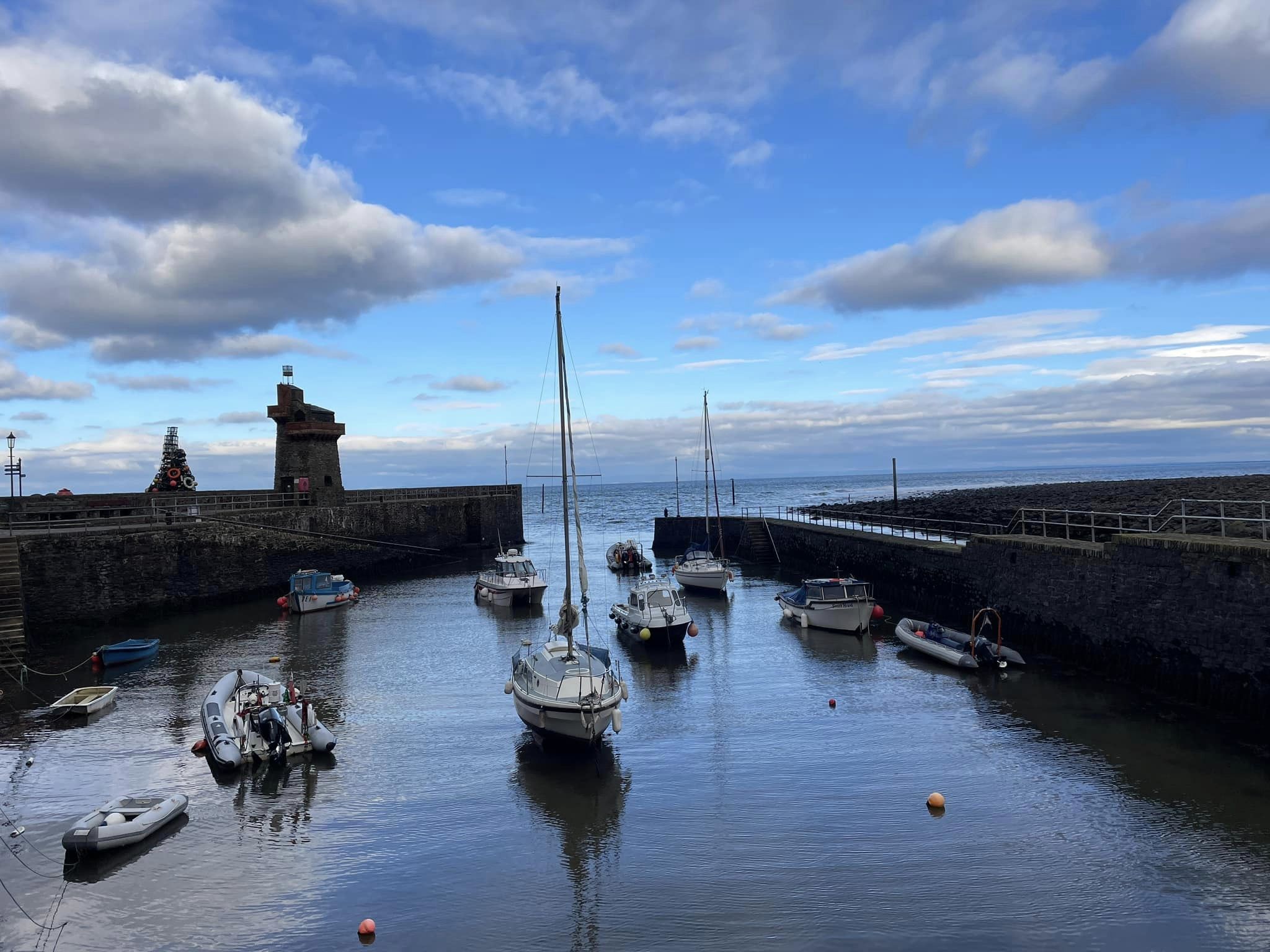
On Friday the 12th, we are holding a small celebration concert in Lynmouth. The event begins at Lynmouth Harbour at 7pm whereupon a “telegram” will be received. The original telegram will be read to the group, and maroons will be fired – as they were on the night of the launch in 1899. A short lantern procession will be led up to St John’s church on Watersmeet Road, Lynmouth. The event itself will cover the history of the RNLI in Lynmouth, as well as the details and historic accounts of the Overland Launch. There will also be a section on the 200th anniversary of the RNLI which also falls in 2024. We are honoured to be joined by guest speaker Dr. Goodwin, CEO of the Voluntary Service Overseas (VSO) and RNLI Trustee.
The event also features music from a talented violinist, and Lynmouth Shanty Crew. Light refreshments will be available at the end of the event.
On Saturday the 13th, we are holding a sponsored haul of Lynmouth’s Rescue Boat (an Arancia Class Lifeboat) from Lynmouth to Porlock.
The event begins with local children from the Lyn Valley area pulling the boat up the pedestrianised shopping street in Lynmouth, whereafter it will be taken up by the ‘crew’ for the main event, towing the boat from Lynmouth over the moors to Porlock.
The crew can be seen in Lynmouth, at County Gate car park, at Porlock, and Porlock weir. Please note we are asking people NOT to join the registered hauling crew en route.
The event posters are attached which give details of the route, along with approximate arrival times.
On arrival at Porlock Weir, with support from the Bottom Ship Pub, we are thrilled to be hosting shanty punk group Skinny Lister, who wrote a song called “13 Miles” about the Overland Launch. It was recently played on BBC Radio 2, and of the back of that we reached out and invited them to come to our event, which they gladly accepted. As well as walking the route with us, they will be performing their song 13 Miles (and a few others from their rip-roaring set) before heading off on their European Tour. We are also delighted to be hearing from the Bridgwater Sea Cadet Band, as well as the ever popular Lynmouth Shanty Crew.
For further information:
https://www.facebook.com/watch/?v=310370530403200 – this is brief video summary of the event, featuring the great grandson of one of the original crew, and the hat he wore around the time while serving on the lifeboat.
https://rnli.org/about-us/our-history/timeline/1899-launch-from-porlock-weir – the RNLI account of the event.
https://louisalifeboat.weebly.com/ – history of the Louisa and the Overland Launch website, with further links.
Background of the Overland Launch
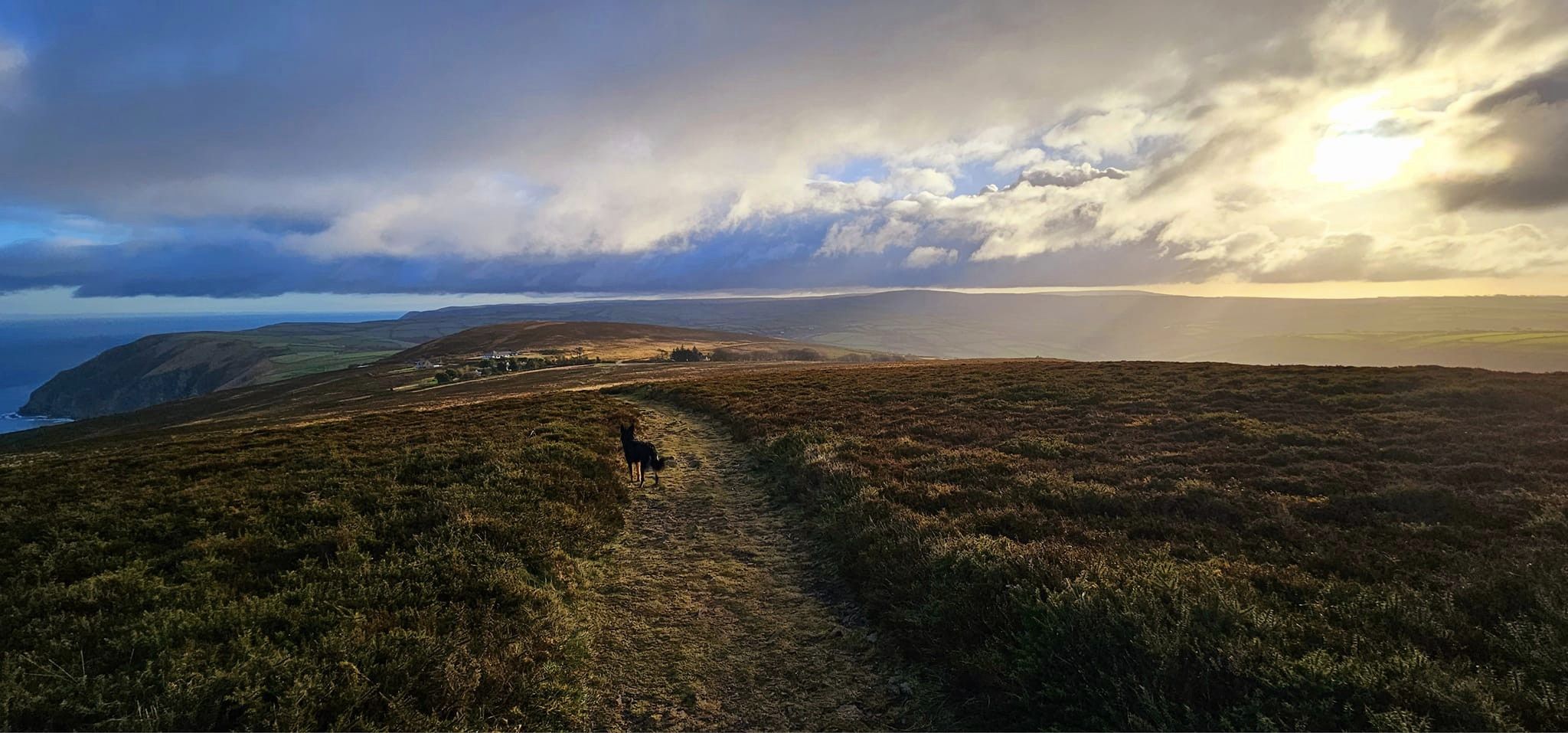
The Overland Launch is one of the area’s most incredible feats of human endeavour and bravery, capturing the spirit of the RNLI. On the 12th of January 1899 a vessel ‘The Forrest Hall’ (a 1,900 tone ship with 18 crew), was reported to be in trouble off the coast of Porlock. It had been under tow when the line had parted, and the rudder of the ship was lost to the rough seas. Drifting dangerously on a lee shore, flares were seen from Porlock and a telegram was sent out calling for assistance. The Coxswain of Lynmouth Lifeboat, Jack Crocombe, declared it was too rough to launch the lifeboat from Lynmouth harbour where seas were washing clean over the harbour wall. He proposed it was launched 13 miles away in Porlock, where it was more sheltered. This journey included a quarter gradient climb of 434m over Countisbury Hill, and a trek across Exmoor.
By 8pm that evening, around 100 local people had gathered to haul the lifeboat, ‘Louisa’, which was 10m long and weighed 10 tons, aided by 16 – 20 horses. Six men were sent ahead with shovels to widen parts of the road. During the whole journey, the gale blew ferociously, accompanied by driving rain. The men were soaked before they had even started, and being preoccupied with preparations and the task in hand, ended up completing the entire feat without any food.
After the difficult climb up Countisbury Hill, they had to stop to repair a carriage wheel that had become detached just outside the Blue Ball. Most of the 100 helpers turned back, leaving just 20 men, plus the 13 lifeboat crew, to carry on the journey to Porlock. At one on stage of the route, it was found that the boat and carriage could not be hauled through together as it was too narrow, and the road could not be widened. In an account of the journey by one of the crew members, G. S. Richards, he says of the coxswain Jack Crocombe that upon discovering this narrow section, undeterred, he declared that:
“…we had come so far, and we were not going to turn back without having a good try for it.” [Extract from ‘The Life-Boat – The Journal of the Royal National Life-boat Institution, September 1933, No. 315, Vol. XXIX]:
And with that, the 10 tonne lifeboat was lifted off the carriage and dragged for one mile on skids, while the carriage was taken onwards over a different route, to meet back with the boat where the road widened. The physical demands of this section, having to stop every few feet to manoeuvre the skids to continue pulling the boat, were arduous. But, they succeeded, and with carriage and boat reunited, made good speed to Porlock from County Gate.
The men were miraculously able to safely navigate their way down the hazardous terrain of Porlock Hill. G.S Richards recounts the descent:
“To go down the hill we had to use all the men and drag-ropes, put the drag and safety chains on the wheels and lash the boat to her carriage, as this was one of the heaviest loads known to have gone down Porlock Hill, but old Tom said if we were able to keep the boat from slipping off her carriage he would be able to get around the corners, very dangerous though they were.
To everyone’s surprise we managed to get down without any trouble, until we reached the bottom of the hill. Here we came to the old cottages and found there was not width for the carriage to go through, so down came the walls. We did not half get choked off by the old lady of the house. She wanted to know what right we had bringing a thing like that at this time of night, knocking down people’s walls and waking them up.
When we told her that it was a lifeboat she was very surprised, as she had never seen one in her life before. We told her that there was a ship in distress off Porlock Weir and we were going to try and rescue the men. That put things all right with her, and she came along with us.”
[Extract from ‘The Life-Boat – The Journal of the Royal National Life-boat Institution, September 1933, No. 315, Vol. XXIX]:
They then discovered that the main route to Porlock Weir, where they were to launch the Louisa had been washed away. They had to reach the weir along the higher road, only to then find that their path was further blocked by a fallen laburnum tree. As G. S. Richards further recounts:
“But we could not stop for that.”
Having cut down the tree, the men finally reached the sea in Porlock at around 6.30am on 13th January, after a nearly 11-hour journey. Although they were tired and hungry, the 13 crew, along with Mr. E. J. Pedder of the Lynmouth Life-boat committee, immediately launched the boat. It took them another hour to reach the Forrest Hall, rowing through the rough seas and ferocious storm. The ships’ anchors had finally held at the 5 fathom line close to Hurlstone Point, and the lifeboat stood by, rowing continuously to keep a safe position.
At daylight, two tugs arrived and managed to get a rope across to tow the ship. Several lifeboatmen from the Louisa went onboard the ship to help the exhausted sailors heave up their anchors. The tugs towed the ship across the channel to Barry in Wales, accompanied by the lifeboat. The Forrest Hall was barely manageable without her rudder and only narrowly escaped grounding on the Nash sands while attempting to reach Barry Docks. They arrived safely at 6pm that evening, and the crew were cared for by the Shipwrecked Mariners Society. The next morning, they had to row the Louisa back to Lynmouth, from Barry…but did get a tow from a steamer for part of the journey.
Their heroic and incredibly difficult rescue meant that the 18 crew of the Forrest Hall all survived. It still stands as one of the most challenging feats undertaken in RNLI history.
The lifeboat crew were:
John (Jack) Crocombe – Coxswain
G.S. Richards – Second-Coxswain
R. Burgess
W. Richards (who was only 16 at the time)
R. Ridler (bowman)
G. Rawle
J. Ward
W. Jarvis
Charles Crick
B. Pennicott
David Crocombe
John Ridler
T. Pugsley
They were joined on the boat when it launched in Porlock by E. J. Pedder, a member of Lynmouth’s lifeboat committee.
A full-scale reenactment took place at the 100th anniversary, with an original pulling lifeboat being hauled by horses and crew.



























 Exmoor 4 all