Exmoor Memories in Watercolours

Yesterday we received this message from Andrea Newton Wesselius on our Facebook page:
Hi, I am from the Netherlands but lived in London for four years in the mid to late eighties.
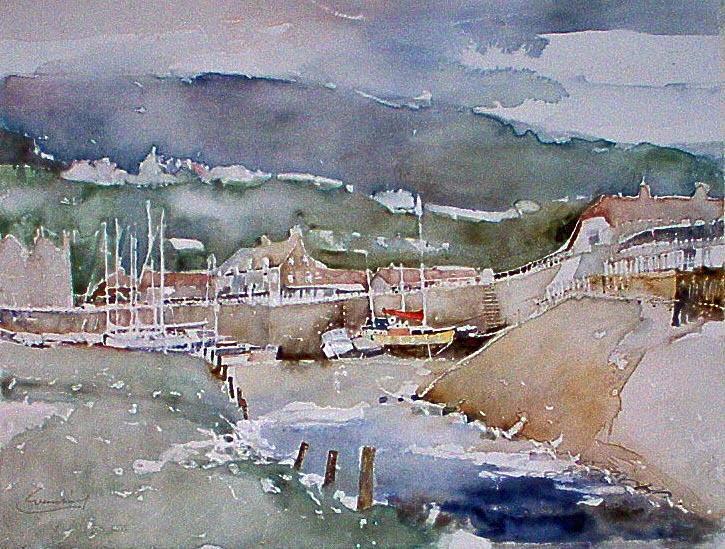
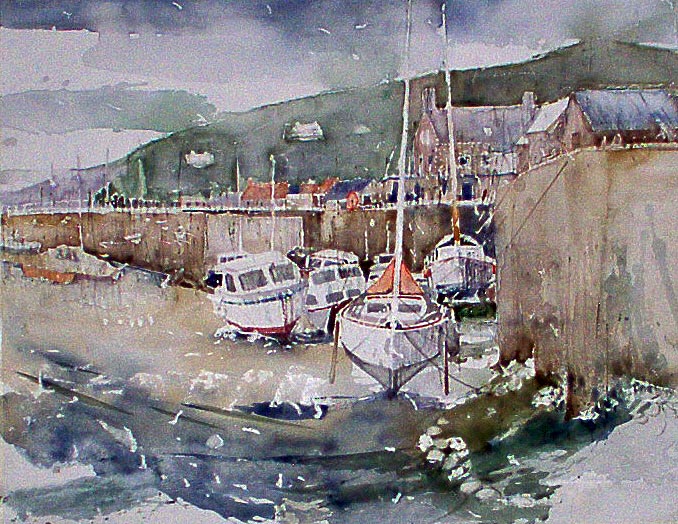
On one of their visits to the UK I took my parents to stay at a cottage in Porlock Weir. Both my parents were artists and always making sketches wherever they went. Based on their scribbles, sketches and photos my dad made a gouache painting of Bossington Hill and some watercolours of the Porlock Weir harbour. I realize they are not completely true to reality, but perhaps they are of interest to you, in which case feel free to show them to the facebook group. Both my parents have passed away in the last three years, and as I am particularly attached to these works they are not for sale, but really just in case you were interested….
These were made by my dad, Jacques Wesselius (1931-2012)
This is a link to his website, in case people want to see what else he did in watercolour.

I’m working on a new website on which I can show all his work (oils, acrylics as well as watercolour) as well as all of the work my mum (Jeanne Wesselius) made.

Best,
Andrea

http://www.wwp-diemen.nl/stadsgezichten/wesselius.htm

Porlock 1

Porlock 2

Porlock 4

Porlock 5

Porlock 6


Exmoor Memories: …. the air of Exmoor is like a dry champagne…

Excerpt from Cecil Aldin, Exmoor. The Riding Playground of England

( first published in 1935)

The air of Exmoor is like a dry champagne; to breathe it makes old men and women young and gives sparkle and “life” to all young people.  No one can be listless or suffer from a liver on the high altitudes of Exmoor in summer. When we descend to the villages and coombes we may feel the heat, but after wading the cool stream and once again arriving on the tops our spirits rise with Exmoor’s life-giving qualities.

Here, on a fine day, at a moorland meet or hacking party, everyone has that party spirit, which nowadays we are so fond of talking about; not a party spirit gained by drinking numerous cocktails but by healthy exercise and an invigorating atmosphere.

In winter time travel on the hill-tops may by an overrated amusement, for the north and east winds come across the Bristol Channel from Wales in a way that makes anyone journeying over the moor at that season long to reach the  shelter of Exford or Porlock.

When it rains here it does it well and truly, … One can get wetter on Exmoor on a rainy day, or when a cold, drenching fog covers the hills, than in any other place in England.

(from Chapter II  Some of its villages and folk)

Exmoor Memories: Summer on the Exmoor Coast

IMG_6677A.G. Bradley, “Exmoor Memories”

(first published in 1926)

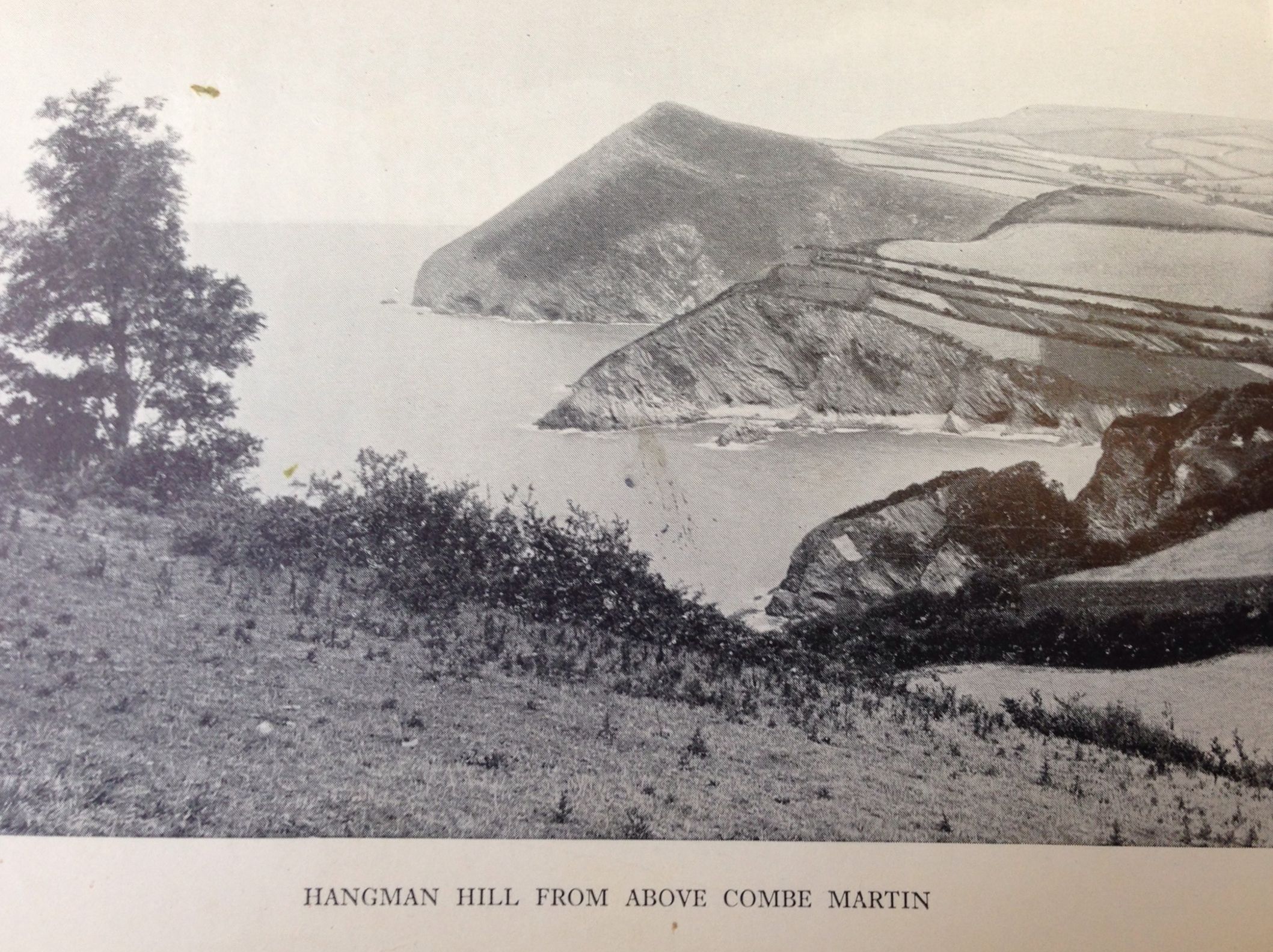
 But Lynton, whether at the first boyish encounter, with its high, uplifting scenery, or at eighteen, when I had come to feel its attractions more deeply, was always my favourite place for these exhilarating trips. (…) Sometimes we took the rough moorland road, as it then was, turning off left-handed on the way to Simonsbath and heading across the open moor for Oare and Brendon, by Brendon Two-Gates, nowadays so familiar to tourists, and so down the glorious valley of the East Lynn. At other times we would take the Combe Martin road, and turning right-handed at Blackmore gate, in those days what its name portended, a turnpike, follow the coach road through Paracombe and on down the valley of the West Lynn. This was the route from Barnstaple for the comparatively small number of visitors that then found their way to Lynton. A long and hilly road of nearly twenty miles, over which agonised honeymooners from flat counties clung together on the coach roof as, with groaning brakes, it rocked down the steep hills, over loose stones and a stream-riven surface. Even Ilfracombe  had only as yet talked of a railroad.  Lynton had not even dreamed of such a thing. It would have seemed to us nothing short of sacrilege. (…)

What can one say of Lynton, or Lynmouth, that has not been told by pens innumerable since those old days of the ‘sixties? It is not so much the bold coast scenery, because that extends with equal, if intermittent grandeur all the way past Ilfracombe to Barnstaple Bay, and eastwards into Somerset, but rather those two lovely winding valleys, wrapped to their summits with foliage, and cloven by white streams foaming to the sea, which make it unique among English coast resorts.

Arthur Granville BRADLEY 1850-1943

IMG_6673

IMG_6674

IMG_6675

Exmoor Literally: A Childhood on Exmoor

The Farmhouse Tree cover


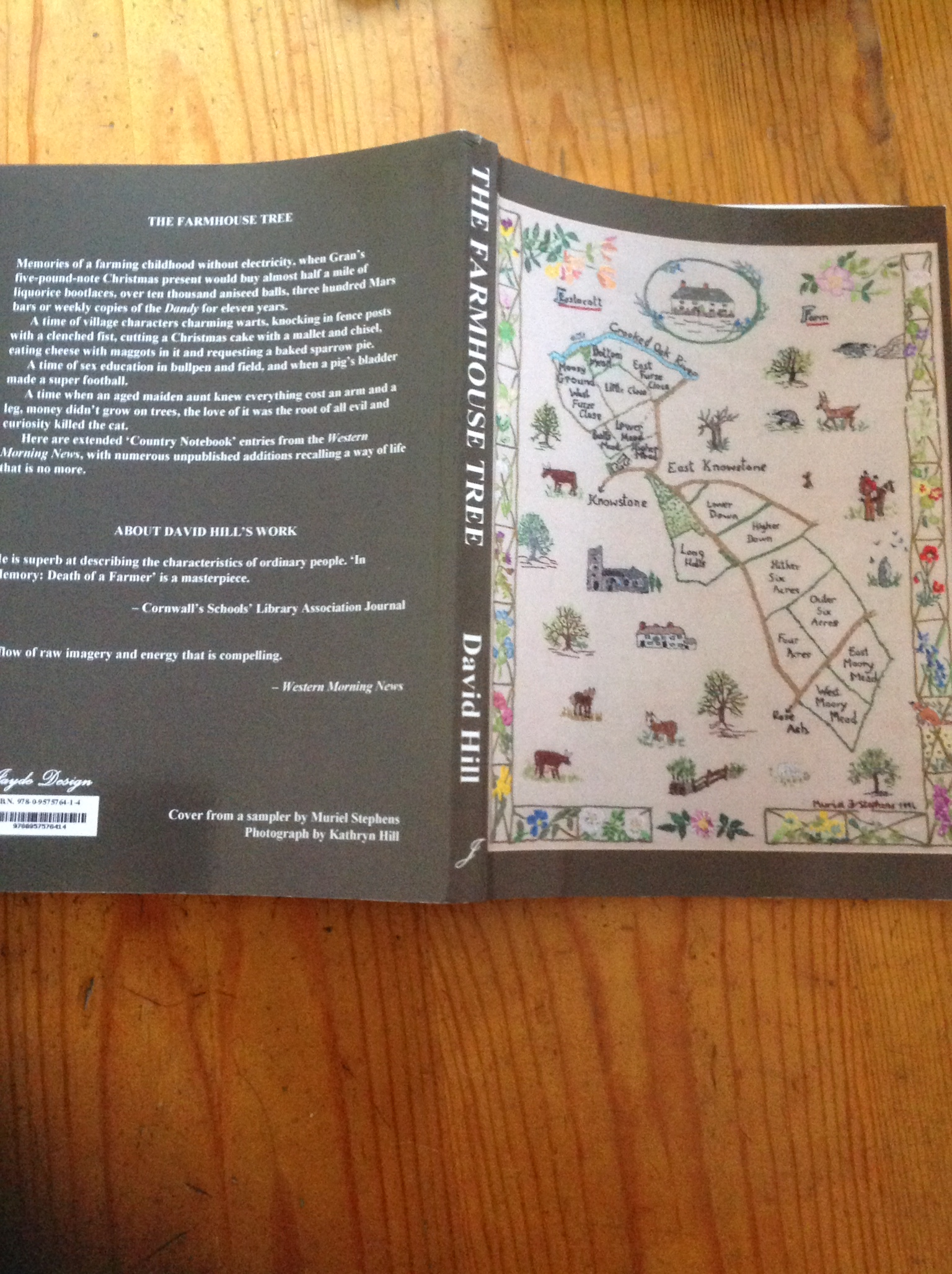
David Hill started work on THE FARMHOUSE TREE in 1976, 14 years after death of his father aged 62 when he was 16.

“Born out of time I suppose, parents married in 1931 when mother was 21and father nearly 30.  Another 16 years, and in 1947 the stork located the gooseberry bush and I was born. No electricity until I was 16, and no mains water or mains drainage. Farm work done with a shire horse. And how I loved the gay harvests, the scent of crushed chamomile, crushed by hoof and boot and the heat under the hayshed’s  galvanised iron roof at the end of the evening when the final load was being pitch forked in. The first ride home  on the cart load of hay. Lurch to the right, lurch to the left. Holding on tight to the lade and the rope.The brush of a low beech branch and the flight of swallow and martin replaced by the wing of bat….But I go on.This probably gives you a taste of the book. A childhood remembered with love.”

“The Farmhouse Tree”  can be obtained by ordering at any bookshop for £12.99 or direct from publisher …Jayde Design. Make cheque out for £12.99 to Jayde Design and send to Jayde Design, 21 Honor Oak  Road,Honor Oak,London SE23  3SH. This includes p/p.

All royalties are going to David’s old primary school at Bishops Nympton and Michael Morpurgo’s Farms for City Children.


Letter from Exmoor: Camping in the Exe Valley

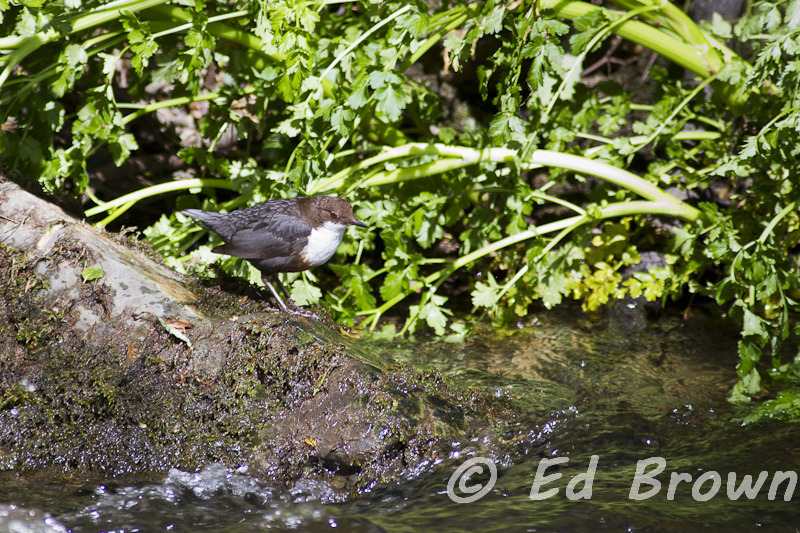
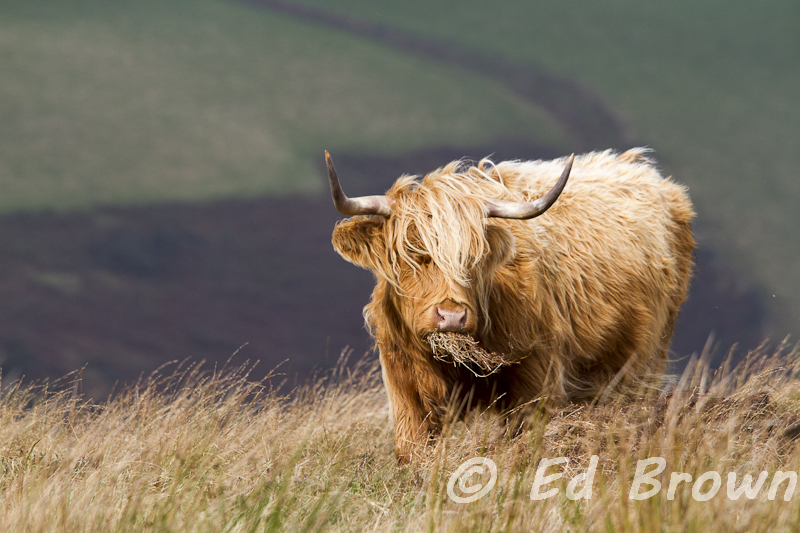
Three years ago I was searching for a campsite to stay in.  My requirements were simple; peace, woodlands and a river if possible.  After hours of fruitless internet searches I found my answer, the Exe Valley camp site, and bonus of all bonuses (for me anyhow) no under 18s.  Having been to various different areas in the Southwest I’m not exactly sure how I managed to miss Exmoor for so long, the scenery is stunning, people friendly and the wildlife top notch.  Within an hour of pitching the tent that first time I was hooked, and still am.  It didn’t matter that it rained in biblical quantities, it didn’t matter the wind could have sent the tent flying like some sodden out of control hot air balloon because I loved it.  I could sit watching that River Exe all day.  I go there for the wildlife of course, and possibly the reason I can’t stay away is that I need to photograph that damned otter! I know he exists I’ve seen the footprints on the riverbank.  But, until that day comes I can fill my time with the dippers,wagtails, buzzards and elusive voles that sneak around the tent at night, not forgetting the roe deer that came bounding down the river on my last visit, or maybe even nipping into the Badgers Holt for a quick beer or 3.  All this of course is from one small area, the vast open parts of the moor up at Dunkery are great and I’ve had a lot of fun looking for deer and the odd moo or two up there.  On a last note, and one that slipped my mind until just now, is if you happen to live in a normal suburban area you’ll realise when you get home how it never really gets dark.  Exmoor gets DARK, I mean really dark, and that owl you just heard in the distance? It may be closer than you think.

Ed Brown

http://www.edbrown.co.uk    RM Stock and print sales

www.facebook.com/edbrownwildlife

Follow me on Twitter

Wildlife of the Exe Valley, Somerset

Wildlife of the Exe Valley, Somerset

Wildlife of the Exe Valley, Somerset

Wildlife of the Exe Valley, Somerset