Exmoor Wildwatch 2014

Exmoor National Park’s amazing wildlife has given inspiration and joy to generations, but the very remoteness that makes Exmoor so special means that we do not have a full understanding of the wildlife that lives on the moor. That is where Exmoor Wildwatch 2014 and the accompanying free wildlife events come in!

Ali Hawkins, Exmoor National Park Wildlife Conservation Officer, explains:  ”Exmoor National Park is home to a fantastic array of wildlife and we would like everyone’s help to find out a little more about some of the special species that live here. We would particularly like to hear about 10 key species, some of which are nationally rare and others we simply do not know enough about. Some, like the cuckoo, are distinctive whilst others such as the round-leaved sundew may require more searching in some of Exmoor’s fantastic bogs. With a little bit of effort you can get to see more of Exmoor’s unique wildlife with our free handy spotter guide.

“The key species are cuckoo, kingfisher, brown hare, adder, common lizard, waxcap fungi, round-leaved sundew and heath fritillary, small pearl-bordered fritillary and comma butterflies.   Recording your sightings could not be easier. Simply go on line to the Wildwatch website or ring the National Park Centre in Lynmouth on 01598 752509.”

To record sightings and to view the free identification guides visit http://www.exmoor-nationalpark.gov.uk/environment/wild-watch. To order a free  Exmoor Wildwatch poster*  please contact the National Park Centres at Lynmouth, Dunster or Dulverton.

Wildwatch 2014 is also supported by 25 plus free wildlife and surveying training events. “Whether you are interested in butterflies, fungi or river life there is something for everyone. All the training is delivered free of charge by experts to encourage people to learn more about Exmoor’s Wildlife through surveying. Again just visit the Wildwatch website”  highlighted David Rolls, Moorland Education and Outreach Officer,  “so whether you are out walking, cycling, on the way to work or school please keep your eyes open and report whether you spot any of these wonderful species.”

Exmoor Wildwatch is part of the New Ecologists project, funded by the Heritage Lottery Fund, Exmoor Trust and Exmoor National Park through the Heart of Exmoor Scheme. For more details on this work please contact David Rolls on, 01398 322164.

South West Tourism Excellence Awards Success for Calvert Trust Exmoor

FB-aCalvert Trust Exmoor are very pleased to have won two Gold awards and Winner of Winners at the South West Tourism Excellence Awards 2013-14, which took place in Plymouth on 30 January 2014.

Calvert Trust Exmoor runs the only 5 star activity centre in the country, and caters for people with physical, sensory and learning disabilities of all ages and levels of ability, together with their families, friends & carers. Activities on offer include sailing, horse riding, wheelchair abseiling, accessible cycling and archery. Over 3,700 guests had a residential break with Calvert Trust Exmoor last year.

0094

The two Gold awards were in the “Access for All” and “Tourism Sport and Experience of the Year” categories.

Tony Potter, Chief Executive of Calvert Trust Exmoor; “This is fantastic news that rewards all the hard work that the Calvert Trust Exmoor team consistently put in;  we are so pleased to be recognised for delivering an excellent experience for anyone and everyone,  of any ability or age. Going on to win the Winner of Winners award was the icing on the cake; I was delighted to be able to accept these awards on behalf of our whole team. ”

Regarding the Winner of Winners award The Judges said:0096

“There are no criteria for this award. At the end of the judging panel meeting its members are asked to identify any entrant which, in their view, has shone out as an exemplar in its field. On this occasion the debate was short. This year’s Winner of Winners was visited independently by two mystery visitors. Both of them came away declared themselves “inspired” by a business that is doing things that others regard as impossible, or simply hadn’t thought of.  It is a genuine exemplar to all tourism businesses on how to widen their audience, be accessible, and deliver excellence.”

With Gold in both the Devon and South West Awards this year Calvert Trust Exmoor are now looking forward to the prospect of represent the region in the National Visit England Awards for Excellence 2014 in May.


Calvert Trust Exmoor is the South West’s premier holiday destination for people with disabilities, and the only 5 star accredited activity accommodation in the country. We welcome over 3,500 residential guests and 5000 day visitors a year with the philosophy of “At Calvert Trust Exmoor it’s what you CAN do that counts”. This sums up our approach to what we do, we help people of all levels of ability to fulfill their potential and be all that they can be.

CalvertTrust Exmoor is the third Calvert Trust Centre. It was opened in 1996 to offer people with physical, sensory and learning disabilities – and their friends and families – the chance to achieve their potential through the challenge of outdoor adventure.

www.calvert-trust.org.uk/exmoor

www.facebook.com/CTExmoor

www.twitter.com/calvertexmoor

www.youtube.com/CalvertTrustExmoorUK


Happy Birthday Exmoor National Park!

enpa

Sixty years ago today, the first steps towards creating Exmoor National Park were made when The National Parks Commission made a Designation Order that set the boundaries for the proposed National Park, recognising that it was a special place and worthy of protection for the nation.  Time was then allowed for comments and decision by the then Minister for Housing and Local Government, Harold Macmillan. His Confirmation Order came on 19th October 1954.

A 60th Anniversary edition of the free Exmoor 2014 (where to go and what to see) publication (previously titled the Exmoor Visitor) has just been printed and contains information about the National Park and details of hundreds of events that will be taking place across Exmoor this year.

Clare O’Connor, editor of Exmoor 2014 said: “There seems to be more happening in the National Park than ever this year with something to do all year round. Due to limited space we couldn’t fit everything in Exmoor 2014 but there are even more events to be found on our website http://www.exmoor-nationalpark.gov.uk/visiting/events . People are welcome to upload their events and can do so at anytime throughout the year.”

Free copies of Exmoor 2014 are available to tourism providers. The publication is packed in bundles of 75 copies so if anyone would like a supply please contact us via email: info@exmoor-nationalpark.gov.uk

EV2014 cover SM


News from Exmoor National Park

603 Clayton Jane Exmoor Pony


The welfare, breeding and management of the free-living Exmoor Ponies within the National Park is the subject of a new, independent report commissioned by the Exmoor Moorland Landscape Partnership Scheme, the Exmoor Pony Society and Exmoor National Park Authority.


The report, The free-living ponies within the Exmoor National Park: their status, welfare and future, compiled by local veterinarian Peter Green MRCVS, confirms that the free-living Exmoor ponies are in good health, are a distinctive local breed and a valuable asset to the amenity and heritage of the National Park.  It seems likely that there is a need to adapt current arrangements to safeguard the future of the Exmoor pony breed and the famous free roaming moorland herds.


Sarah Bryan, Exmoor National Park Head of Conservation & Access said: “The key to success is the different organisations working together with the moorland herd owners and land owners to improve the situation and this report will be used to inform an action plan.”


The full report is available at: http://www.exmoor-nationalpark.gov.uk/environment/wildlife-and-ponies/exmoor-ponies  and anyone with an interest in the future of Exmoor ponies is welcome to comment via the form provided.

Jason Ball, manager for the moorland partnership said: “This is an excellent independent report – the moorland herd owners have discussed Peter Green’s findings directly with him at a presentation evening and Exmoor National Park Authority will be collecting their feedback.”

Sue McGeever from the Exmoor Pony Society commented: “The society is delighted that the Exmoor Moorland Landscape Partnership commissioned this report to look at the long-term future of moorland herds and is looking forward to continuing its working relationship with the Exmoor National Park Authority, the Rare Breed Survival Trust and the moorland farmers to ensure that it fulfils its role as ‘Guardians of the Breed’ whilst working within the current EU/DEFRA legislation.

“The Exmoor Pony Society was founded in 1921 by a group of moorland farmers with the aim of keeping the free-living ponies living on Exmoor ‘true to type’ and in their words ‘without foreign blood’.  In order to do so, they introduced a studbook and an inspection process which has continued throughout the decades – the low point was post the Second World War when just 50 ponies remained on the moor and there are now nearer 500 registered ponies running in 21 herds.”

PS:  The study was commissioned as part of the Empowering Moorland Managers project on the Heart of Exmoor Scheme, and the findings will help shape future management practices on the moors. The scheme is grateful to the Leader Funding from West Somerset Local Action and from Leader for Torridge and North Devon; also the Heritage Lottery Fund.


Heritage focus for Valley of Rocks improvements

Lynton and Lynmouth Town Council has begun projects to enhance the famous Valley of Rocks, thanks to a major grant of £93,000 awarded by the Exmoor National Park Partnership Fund and £40,000 from the Heritage Lottery Fund and the Amory and Heathcoat Trusts via the Heart of Exmoor Scheme.

101 John McGowan Valley of the RocksWorks include restoring coastal path access to the hidden beach at Wringcliff Bay, renovating the 19th-century Poet’s Shelter and installing a traditional estate railing fence at the Cricket Club, similar to the one seen in early photographs of the area. Visitors will be welcomed by a resurfaced car park, made greener to reduce its impact in the landscape. New interpretive resources will highlight walk routes and the valley’s geology, history and wildlife.

Lynton and Lynmouth Town Council’s success in raising funds has brought in more than £130,000 to match its own £40,000 investment in the projects. Councillors worked hard to listen to the community and develop suitable designs in consultation with experts in landscape, historic environment and wildlife.

Mayor Suzette Hibbert said: “This project has been on the Council wish list for some years. Thanks to the appearance of the Exmoor Moorland Landscape Partnership and the leadership of Councillor Bernard Peacock we have at last seen the start of this major scheme. Once again we are indebted to the Exmoor National Park Partnership Fund and so we say thank you to them and to the Heart of Exmoor Scheme.”

Jason Ball, Heart of Exmoor Scheme Manager, praised the initiative: “The projects cleverly maintain visitor capacity and access, yet with less

Valley of the Rocks on the last day of January 2013

Valley of the Rocks on the last day of January 2013

clutter and tarmac – always a good thing – so it emphasises the wild moorland character and unique features that visitors find so attractive. We are proud to support this thanks to money from the Heritage Lottery Fund and the Amory and Heathcoat Trusts which the Exmoor Society secured for exactly this type of project.”

The changes will sensitively restore a sense of wildness while simultaneously helping people to enjoy and explore the Valley of Rocks – a favourite destination for locals and visitors to Exmoor National Park. The dramatic clifftop valley on the North Devon coast is crowned with rock features and its special geology earned it status as a SSSI (Site of Special Scientific Interest). The Valley of Rocks is home to hardy free-roaming goats, Exmoor ponies and cliff-nesting birds such as peregrine falcon and fulmar. Cradled in the valley are a village green cricket pitch, a tea room and the Poet’s Shelter which alludes to poets inspired by the amazing location.

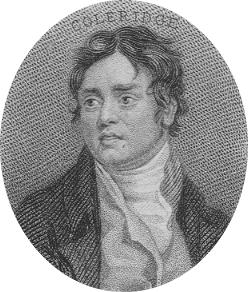
coleridge2 Coleridge, William Wordsworth and his sister, the poet and diarist Dorothy Wordsworth, visited the Valley of Rocks as part of a longer exploration of Exmoor’s coast in November 1797. Coleridge and the Wordsworths fell in love with the Lynton area and even thought of settling there. Coleridge wrote to a friend: “We will go on a roam to Linton and Linmouth, which if thou camest in May will be in all their pride of woods and waterfalls, not to speak of the august cliffs, and the green ocean, and the Vast Valley of Stones all of which live disdainful of the seasons or accept new honours only from the winter’s snow.”


Accessible Exmoor

NEWS FROM EXMOOR NATIONAL PARK

‘People can feel more confident about attending the many accessible events that take place on Exmoor’ –was the key theme at a workshop jointly hosted by the Exmoor National Park Authority and the Heart of Exmoor scheme recently at the newly opened Lynmouth Pavilion.

The event was attended by range of organisations and individuals including both event organisers and those with expertise and personal experience in accessibility issues.  There were presentations from Richard Pitman of Taunton based Compass Disability Services and an update on recent work on developing “Phototrails”  in Exmoor.

Interpretation and Education Manager at Exmoor National Park, Ben Totterdell said: “Every year hundreds of events take place on Exmoor, from guided deer walks to village fetes and art exhibitions. However, for many people with disabilities there is often not enough information about these events for them to feel confident about coming along – or simply not enough events that are planned with the needs of people with disabilities in mind.

“It was great to have so many people there who are all committed to working together to ensure Exmoor can be enjoyed by everyone. I certainly learned a lot and will be looking at how we can improve our events programme and information for next year.”

Comments from other participants include: ‘Thanks for an excellent day’ Wendy Mills (National Trust)

‘A very refreshing day. Made us realise that access is not just about wheelchairs. The workshop will definitely make us think differently about our events in 2014’  Ruth Hyett (Exmoor Natural History Society and Porlock Visitor Centre)

‘I thought it was a really good day and was pleased to be invited. There were certainly lots of light bulb moments for participants as they came to understand accessibility in its wider sense’ Richard Pitman (Compass Disability)

David Rolls, Heart of Exmoor Outreach and Education Officer said: “Exmoor has a host of wonderful opportunities for everyone and I thought the day was very constructive in highlighting many of these.  The event was part of the wider “Access for All” project which Exmoor National Park and the Heritage Lottery Fund have been financially supporting.”


Raising some of Exmoor’s Rare Trees

 NEWS FROM EXMOOR NATIONAL PARK     

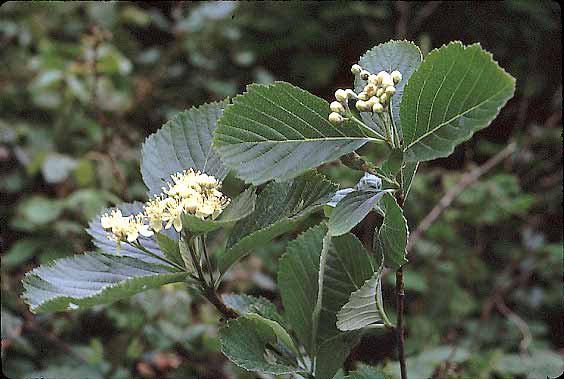
whitebeam2 - ENPAThe number of Exmoor’s  whitebeam trees is set to increase if a new project by National Park Authority succeeds in raising some rare whitebeam or Sorbus tree varieties from seed from its own woodlands.

Woodland Projects Support Officer Loren Eldred commented:  “This autumn has been such an excellent season for tree fruit and nuts that we hoped that we might be lucky with finding some fruit on some of the rare Sorbus trees this year, so we were delighted when we came across a good number of fruit from Sorbus margaretae trees at Culbone Wood and even more fruit from several Sorbus devoniensis trees at Timberscombe Woods.”

The National Park Authority is working with Tim Greenland from local tree nursery, Exmoor Trees in Exford who will be attempting to germinate some of the Sorbus seeds extracted from the fruits this winter. If this proves successful and the trees can be raised, they will be planted back into the Authority’s  woodlands when they are a few years old in order to help the species to grow strongly in future.

Tim Greenland said:  “I am pleased to be working with Exmoor National Park Authority on this project.  Although it can be difficult to germinateTim Greenland, Exmoor Trees Exford - ENPA the Sorbus seeds, I am hopeful that by spring next year, we will have been able to raise a number of the tree seedlings.”

Some of the Sorbus species are extremely rare in the UK, numbering just a few hundred trees or less.   Exmoor National Park is fortunate to contain several of the rare Sorbus species, particularly along the steep, rocky coastal woodlands and valleys, which grow nowhere else in the world. They can be difficult to tell apart and identification in the field has to rely on subtle differences between leaves, flowers and berries. Sorbus devoniensis is slightly more widespread than some of the other rare Sorbus species and tends to grow along woodland edges and in old hedges in the west country of England, but it is still not a common tree.

Exmoor National Park Authority has more information about the rare Sorbus varieties in the Trees and Woodlands pages on their website: www.exmoor-nationalpark.gov.uk

Media Release: Lynmouth Pavilion opens this Thursday

enpaBoost for Lynmouth

The North Devon coastal town of Lynmouth will receive a major boost when the new Lynmouth Pavilion is officially opened this Thursday (17 October 2013) after less than twelve months of construction work.

Andrea Davis, Chairman of Exmoor National Park Authority, who was instrumental in securing substantial funding from Devon County Council will open the £1.2 million Pavilion building. The project to replace the old 1930s Pavilion, which was beyond repair, was jointly funded and led by Exmoor National Park Authority.

Miss Davis said: “The funding we received from Devon County Council’s ‘Invest in Devon’ scheme has enabled this amazing state of the art attraction to come about which will benefit tourism and businesses in Lynton and Lynmouth and the wider Exmoor area for years to come.”

On the ground floor, the National Park Centre is a learning and experience hub which will help local people and visitors understand more about Exmoor National Park. The Pavilion has been designed to have a mix of high tech and more traditional exhibits with everything from a large touch screen table and ipads to the traditional seaside photo board.  A short film, which has been specially commissioned for the Centre, offers new, aerial views of Exmoor National Park and will run in the audio theatre offering people a different view of Exmoor and encouraging them to explore further.

On the top floor is a new café run by a local Lynmouth business with exhibition space available which will change throughout the year. Also upstairs is the new home of the HLF-funded Lynmouth Pavilion Project aimed at uncovering local heritage and displaying it for all to enjoy. The Project will also work with schools and  colleges in the area and will be recruiting and training volunteers.

Chris Spear, area director at Morgan Sindall said: “We are delighted to have been involved with the rebuilding of the iconic pavilion.  The new year round facility will be entirely beneficial to Exmoor National Park and the local community.  The opening is the perfect way to celebrate the work achieved in the rebuilding of Lynmouth Pavilion.”

News from the Exmoor National Park Authority

Half term fun for all the family

Wednesday 30 October  will be the final chance this year to enjoy a BIG Adventure Day – taking place from 10am at Webbers Post, near Wheddon Cross, in Exmoor National Park. Hundreds of people have enjoyed the previous Big Adventure Days so far this year and more are planned for 2014.

National Park Ranger Adam Vasey says: “We’ve got a great selection of activities this year including the Family Orienteering course run by 1610, walks by National Trust Rangers and all the usual range of fun, family friendly games and activities.

“As a special treat, the lead artist on the Coleridge Way project, Christopher Jelley, will be talking about his QR Code Poetry and also the story boxes which were located along the trail this summer. The story boxes have now been retrieved and will be on display for you to read the stories which blossomed inside. The premise was simple, find the box, read the story so far, add a few words or a drawing but no more, then leave for the next walker.”

Anyone wishing to try out the QR Code poetry (square bar codes) should bring along a smart phone with an app for scanning bar codes to reveal the words. The words were written by the three local First Schools who journeyed along the trail and into the Somerset countryside. Christopher then rendered the poems into QR codes and reinstalled them along the Coleridge Way. The poetry on the Jubilee Hut at Webbers Post was written by Porlock St Dubricius School, though Dunster and Nether Stowey school poetry will also be available to view on the day.  More about Christopher diverse projects can be seen on his web site www.storywalks.info

There is car parking and toilet facilities on site – for more information please contact the National Park Centre at Dulverton, phone 01398 323841.

A limited number of Tramper all-terrain mobility buggies will be available for hire at this event for free, but should be booked in advance. For more details contact Countryside Mobility on 01392 459222 or 07841 204397, info@countrysidemobility.org or visit www.countrysidemobility.org


Autumn Colour

Make the most of  the Autumn colour on Tuesday 29 October at 10am and join a National Park Ranger for an Ode to Autumn, a circular walk with stunning views over ancient woodland. Meet at the National Park Centre (sea front) at the new Lynmouth Pavilion. Bring a snack and a hot drink for a walk of about 3hr/4.5 miles. Please wear walking boots and suitable clothing, dogs are welcome. For more information call the Centre on 01598 752509.


News from Exmoor National Park: White Rock Cottage in Simonsbath – Open Day


ENPAExmoor National Park Authority has recently completed the purchase of White Rock Cottage (the former school site) in Simonsbath. The previous owners, West Somerset Council, agreed to sell the site once it became clear that plans to develop it for affordable housing, while conserving its historic importance, were not likely to be financially viable.


Chief Executive Dr Nigel Stone said: “The National Park decided to buy the property primarily with the objective of safeguarding the historic interest of this important site which formed part of the Knight estate and the 19th Century reclamation of Exmoor Forest.


“We are already working with the Parish Council and local community and there will be a public open day on Monday 18November when we look forward to welcoming anyone who would like to help shape our thinking on the best way to conserve and utilise White Rock Cottage and other heritage sites in Simonsbath.  We intend that the project should be led and managed by a local group and would be pleased to hear from anyone who would like to play a part in the development of the project. We would also like to hear from anyone who went to the school or has memories of the site in the past.

“In time, we hope to secure the funding needed to restore the buildings and provide public access so that, when combined with the many other locations of interest such as the landscape gardens in Ashcombe: the 19th century sawmill and pound building, Simonsbath can become an even more interesting destination in the centre of the National Park.”

A recent report on White Rock Cottage commissioned by the National Park Authority reveals the former school site was built in the early 1800’s as a ‘picturesque’ element – a cottage orné – within a designed garden landscape being developed by the Knight family. The original rustic cottage was extended in the 1850s to provide on-site staff accommodation and part converted in 1857 to use as a school within the newly established community of Simonsbath.  The building has been used in the later 20th century as a research and study centre but has been closed for a considerable time.

Now that the building has been acquired, the National Park will be undertaking conservation work aimed at halting the further deterioration of the building which has been exposed to the elements for some time. In order to start the process of drying out the building, a local conservation builder will be removing loose masonry and render; opening up the door and window openings and covering the whole structure with a temporary scaffolding roof.  The drying process may take one or two years to complete by which time future plans will have been prepared and funding sought for the full restoration phase to begin.

The event on 18th November will include a display about the area in Boeveys tea-room where refreshments will be available.

Also on the 18 November the historic 19th century water-powered sawmill at Simonsbath will be open from 10am-4pm. The sawmill is owned by the National Park Authority and there will be ‘drop-in’ tours available all day.

There is limited public parking at the mill so people might prefer to park at the public car park at Ashcombe, where there are toilets and walk 500 metres to the site.